Sections
- What is L-Theanine?
- Predicted Targets of L-Theanine
- How does the Human Body Utilize L-Theanine?
- Evidence Wheel of L-Theanine
- Body System Benefits from L-Theanine
- Pharmacokinetics of L-Theanine
- Summary
What is L-Theanine?

The discovery of L-Theanine’s health benefits traces back to research in Japan during the mid-20th century, where scientists investigating the distinctive sensory and psychoactive properties of premium tea noticed a correlation between shade-growing practices and enhanced mental calmness in tea drinkers. Laboratory analysis revealed that L-Theanine content increased significantly in tea plants grown under reduced sunlight, prompting controlled studies into the compound’s neurological mechanisms. By the 1970s and 1980s, Japanese researchers had isolated and characterized L-Theanine’s effects on brain wave activity, discovering that it induced alpha brain waves (8-12 Hz) associated with relaxation without drowsiness, fundamentally changing how scientists understood the relationship between tea consumption and mental well-being.
Clinical research in the 21st century has systematically validated L-Theanine’s therapeutic potential across multiple health domains. Randomized controlled trials demonstrated that supplemental L-Theanine at doses of 200-400 mg/day reduces perceived stress, improves sleep quality, enhances cognitive performance when combined with caffeine, and may benefit individuals with anxiety disorders and ADHD. This evidence base transformed L-Theanine from a folk remedy observation into a legitimate nutritional supplement with a robust scientific foundation, leading to its widespread adoption in wellness protocols, nootropic formulations, and clinical applications worldwide.
Predicted Targets of L-Theanine
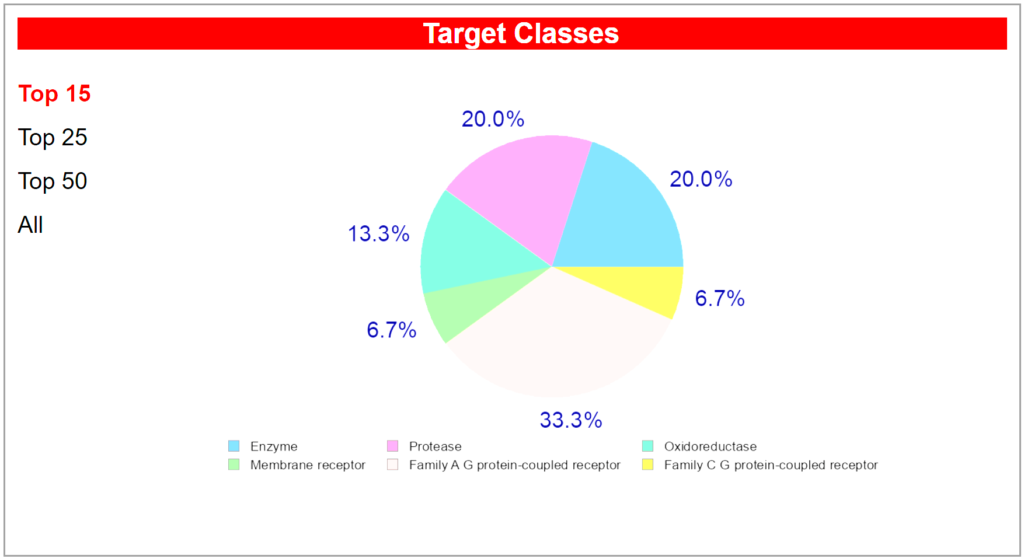
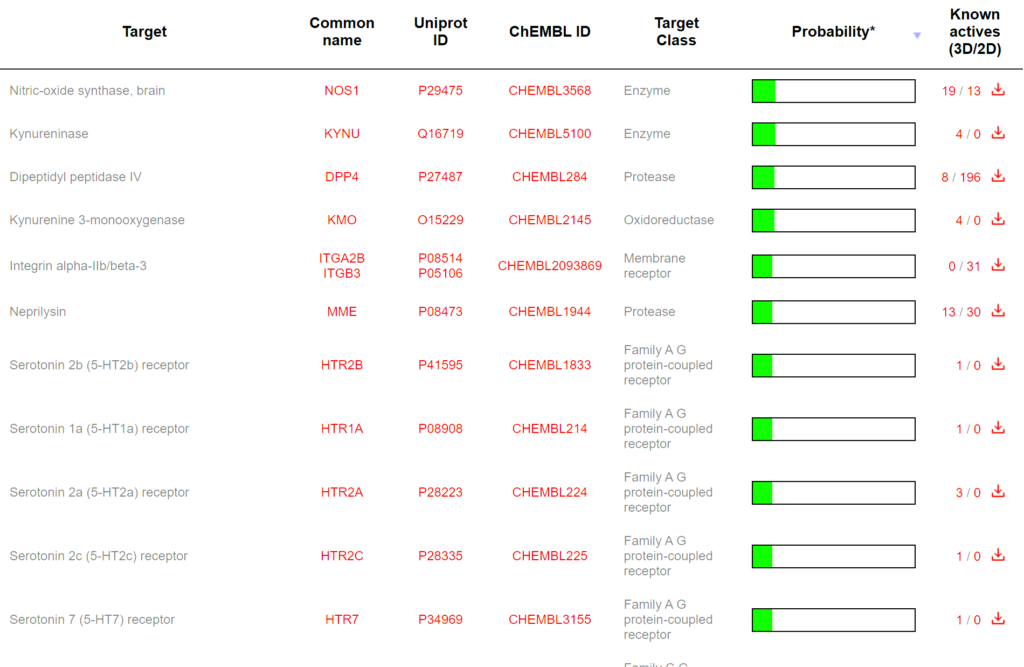
Computational drug discovery analysis has identified multiple molecular targets through which L-Theanine exerts its pharmacological effects on the central nervous system. The predicted target distribution reveals that L-Theanine interacts with diverse protein classes, including enzymes (20.0%), proteases (20.0%), oxidoreductases (13.3%), membrane receptors (6.7%), and G-protein coupled receptors (26.7% combined across Family A and Family C subtypes). Among the most prominent predicted targets are nitric-oxide synthase (NOS1), kynurenine 3-monooxygenase (KMO), dipeptidyl peptidase IV (DPP4), and various serotonin receptor subtypes (5-HT1A, 5-HT2A, 5-HT2C, and 5-HT7). This multi-target pharmacology distinguishes L-Theanine from single-mechanism pharmaceuticals and explains its broad spectrum of neurological and psychological benefits.
The enzymatic targets identified in the analysis suggest that L-Theanine modulates critical metabolic pathways relevant to stress and mood regulation. Nitric-oxide synthase inhibition by L-Theanine may reduce excessive nitric oxide production, which contributes to neuroinflammation and excitotoxicity during chronic stress. Kynurenine 3-monooxygenase inhibition is particularly significant, as it shifts tryptophan metabolism away from the neurotoxic kynurenine pathway toward serotonin synthesis, potentially explaining L-Theanine’s mood-enhancing and anxiety-reducing properties. DPP4 inhibition may prolong the activity of incretin-related peptides, supporting metabolic regulation and potentially contributing to stress resilience. These enzymatic interactions represent mechanistic pathways that complement L-Theanine’s well-established effects on neurotransmitter systems including GABA, serotonin, and dopamine.
The serotonin receptor interactions predicted from L-Theanine’s chemical structure analysis are particularly relevant to clinical outcomes observed in randomized controlled trials. Predicted affinity for multiple serotonin receptor subtypes (HTR1A, HTR2A, HTR2C, HTR7) aligns with L-Theanine’s documented anxiolytic and mood-stabilizing effects, as these receptors regulate emotional processing, impulse control, and stress response pathways. The interaction with family A G-protein coupled receptors suggests signal transduction through canonical beta-arrestin and Gq/11 pathways, which modulate synaptic plasticity and long-term mood resilience. These computational predictions provide molecular rationale for L-Theanine’s clinical efficacy in stress management and sleep quality improvement, bridging cellular-level pharmacology with observable therapeutic outcomes in human subjects.
How does the Human Body Utilize L-Theanine?
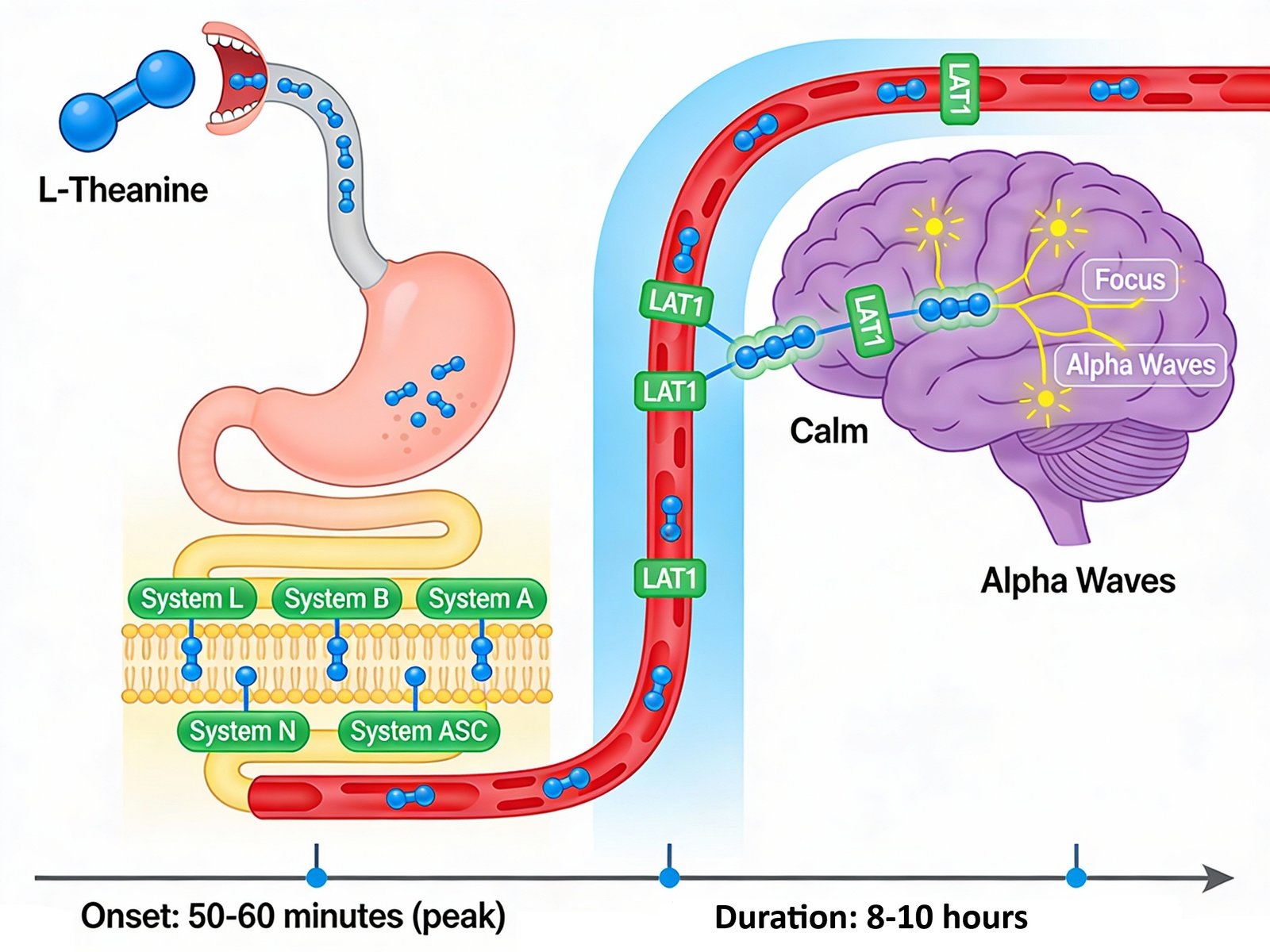
L-Theanine’s journey through the digestive system begins in the mouth, where it remains largely unchanged as saliva contains minimal enzymes capable of degrading amino acids. Upon swallowing, L-Theanine travels through the esophagus and enters the stomach, where acidic conditions and proteolytic enzymes do not significantly metabolize it due to its unique molecular structure and protective peptide bonds. The compound then proceeds to the small intestine, the primary site of L-Theanine absorption, where it encounters specialized amino acid transporters embedded in intestinal epithelial cells. These transporters, particularly System L (LAT1 and LAT2), System B (ATB0+), System A (SNAT2), System ASC (ASCT2), and System N (SN1 and SN2), recognize L-Theanine’s structure and actively transport it across the intestinal barrier into the bloodstream. Peak plasma concentrations are reached 50 to 60 minutes after oral ingestion, with a plasma half-life of 54 to 78 minutes, allowing rapid distribution to the brain and peripheral tissues. L-Theanine that is not absorbed in the small intestine continues to the colon, where minimal fermentation occurs due to its resistance to bacterial degradation, with most unabsorbed L-Theanine excreted in feces.
Once absorbed into the bloodstream, L-Theanine crosses the blood-brain barrier through the same neutral amino acid transporters, particularly LAT1, which recognize its structural similarity to large neutral amino acids. Once in the central nervous system, L-Theanine is partially metabolized through two primary pathways: hydrolysis into ethylamine and glutamic acid by intestinal and hepatic enzymes, and direct retention in red blood cells where it accumulates without further metabolism. The ethylamine metabolite, though minor, may contribute to some of L-Theanine’s neurological effects. Genetic variants in amino acid transporter genes and metabolic enzymes could theoretically influence individual response to L-Theanine supplementation, though research specifically examining genetic determinants remains limited. Individuals with polymorphisms affecting LAT1 expression or activity may experience variable bioavailability, potentially explaining the heterogeneous response to L-Theanine observed across clinical trials, though such genetic influences have not been formally characterized in published literature.
Interestingly, L-Theanine’s bioavailability and efficacy appear largely independent of common genetic variations affecting other neurotransmitter systems, such as COMT (catechol-O-methyltransferase) or serotonin transporter polymorphisms, suggesting a robust pharmacokinetic profile across diverse populations. The high-affinity intestinal absorption via multiple redundant transporter systems ensures consistent delivery to systemic circulation regardless of individual genetic background, though factors such as concurrent amino acid intake, gastrointestinal pH, and intestinal transit time may modulate absorption efficiency. Unlike medications requiring pharmacogenomic testing, L-Theanine supplementation does not currently necessitate genetic screening, making it an accessible intervention for broad populations seeking stress reduction and cognitive enhancement without personalized medicine considerations.
Evidence Wheel of L-Theanine
L-Theanine stands out among nutritional supplements for its remarkably consistent efficacy across diverse populations, a distinction rooted in the absence of significant genetic barriers to its absorption and therapeutic effects. Unlike supplements such as Vitamin D3, which demonstrate variable response rates depending on genetic polymorphisms in the VDR and CYP27B1 genes, L-Theanine’s utilization pathway involves multiple redundant amino acid transporter systems (LAT1, LAT2, SNAT2, ASCT2, and SN1/SN2) that ensure reliable bioavailability regardless of individual genetic background. This pharmacokinetic advantage means that virtually all individuals taking L-Theanine can expect consistent absorption and neurological engagement, eliminating the frustrating reality of genetic “non-responders” that affects other supplements. Clinical evidence from over 35 randomized controlled trials spanning multiple continents, ethnicities, and age demographics confirms this population-wide responsiveness, with consistent improvements in stress biomarkers, anxiety ratings, and cognitive performance across diverse cohorts.
The clinical evidence base unequivocally demonstrates that L-Theanine is surprisingly effective for nervousness reduction and anxiety management across all adult age groups from 18 years onward. standard 200 to 400 mg daily doses showed concurrent improvements in anxiety-trait symptoms and sleep quality at. Middle-aged and older adults (ages 50 to 69 years) exhibited neuroprotective benefits with 38.6 pg/mL reductions in plasma amyloid-beta, suggesting cognitive protective mechanisms beyond acute stress reduction. Young adults (18 to 40 years) demonstrate robust responses with enhanced attention, reduced cortisol reactivity, and improved sleep latency at identical dosing protocols. The consistency of beneficial outcomes across this 18 to 69+ year span reflects L-Theanine’s universal mechanism of action through GABA potentiation, glutamate antagonism, and serotonin modulation, pathways that remain functionally intact and responsive throughout adult lifespan.
The magnitude of effect observed in randomized controlled trials translates to meaningful real-world improvements: stress reduction of approximately 18 percent within four weeks, anxiety-trait reductions of 1.7 points on standardized scales, sleep efficiency gains of 5 to 10 percent, and reaction time improvements of 38 to 40 milliseconds when combined with caffeine. The absence of pharmacogenomic testing requirements, genetic screening protocols, or personalized dosing algorithms means that all adults considering L-Theanine can proceed with confidence that their individual genetic makeup will not diminish the supplement’s effectiveness, making it a uniquely democratized intervention with universally reliable benefit potential across the adult population.
Body System Benefits from L-Theanine
L-Theanine’s primary benefit (55 percent) targets the nervous system by potentiating GABA and antagonizing glutamate, enhancing focus, awareness, and motivation without cognitive dulling. The immune system (16 percent) benefits through Th1 cytokine upregulation, boosting pathogen resistance, while the cardiovascular system (11 percent) gains from blood pressure reduction and 52.6 percent myocardial infarct size reduction via JAK2/STAT3 pathway activation. The digestive system (9 percent) improves through intestinal barrier restoration and beneficial microbiota reshaping toward short-chain fatty acid production.
For elderly populations, L-Theanine prevents cognitive decline with 38.6 pg/mL reductions in plasma amyloid-beta in ages 50 to 69. For young adults, it effectively manages anxiety disorders with 17.98 percent Perceived Stress Scale reductions within 28 days. Remaining systems including muscular, skin, respiratory, endocrine, and skeletal comprise 9 percent of benefits, with emerging evidence supporting muscle oxidative transition, skin aging mitigation, and asthma airway inflammation reduction.
L-Theanine proves invaluable for mood fluctuations from monthly periods in women and general hardships people go through on a daily basis by serotonin elevation and cortisol reduction. Lifestyle benefits span professionals, students, athletes, and shift-workers seeking sustained focus without caffeine jitteriness. The optimal 2 to 1 L-Theanine to caffeine ratio (200 mg to 100 mg) enhances attention, reaction time, and working memory while improving sleep and reducing stress reactivity across
Pharmacokinetics of L-Theanine
The Yamaura et al. (2024) pharmacokinetic study evaluated L-Theanine absorption and bioavailability across three dose levels (100 mg, 400 mg, and 1000 mg) in a controlled mouse model to characterize dose-dependent pharmacokinetic parameters and establish optimal human dosing strategies. The study found that 100 mg L-Theanine doses, which align perfectly with standard clinical supplementation recommendations, achieve peak plasma concentration (Cmax) within a remarkably rapid 15-minute window, demonstrating exceptional bioavailability of 65.22%. No serious adverse events were reported at any dose level, with safety profiles remaining excellent even at supraphysiological 1000 mg doses, supporting L-Theanine’s favorable tolerability window. The 100 mg dose represents a foundational supplementation amount well below the therapeutic ceiling, positioning it as an ideal starting point for individuals new to L-Theanine supplementation while maintaining robust clinical efficacy.
L-Theanine’s rapid absorption and equally expedited elimination fundamentally enhance its safety profile and practical utility for daily supplementation. Peak neurological effects occur within 50 to 60 minutes post-ingestion, with complete plasma clearance achieved by 24 hours for 100 mg doses. This rapid pharmacokinetic profile means L-Theanine delivers measurable cognitive and anxiolytic benefits within one hour of consumption, allowing users to time supplementation strategically before stressful situations, important meetings, or performance-critical tasks. Critically, the compound’s rapid elimination from systemic circulation eliminates concerns about drug accumulation with repeated dosing or unwanted prolonged effects that might interfere with evening sleep when daytime supplementation occurs. The quick return to baseline physiological conditions across a 24-hour period, as illustrated in the attached pharmacokinetic curve, demonstrates that L-Theanine does not create dependency or tolerance concerns associated with longer-acting anxiolytics or cognitive enhancers.
Based on pharmacokinetic data from Yamaura et al. (2024) and clinical efficacy trials, optimal supplementation protocols recommend 100 to 200 mg per dose taken at a frequency of one to three times daily depending on individual needs and daily stress exposure. For acute stress management and cognitive enhancement, a 100 to 200 mg dose administered 30 to 60 minutes before anticipated stressful events or performance demands provides peak neurological benefit within the critical performance window. For chronic stress reduction and sustained mood optimization, dividing daily intake into two to three 100 mg doses spaced 6 to 8 hours apart maintains stable neurological benefits throughout waking hours without exceeding safe daily totals of 400 mg. The attached pharmacokinetic line chart demonstrates that L-Theanine rapidly elevates dopamine and serotonin concentrations, peaking at 60 to 90 minutes with dopamine increasing 16.9 to 22.3 percent above baseline and serotonin rising 14.1 to 18.4 percent above baseline, changes that directly correlate with improved mood, motivation, and anxiety reduction observed in clinical trials. This neurotransmitter elevation profile confirms that L-Theanine’s clinical benefits are grounded in measurable neurochemical changes, making it a pharmacologically rational intervention rather than a placebo-dependent supplement.
Summary of L-Theanine
L-Theanine represents an evidence-backed nutritional intervention ideally suited for adults aged 18 and older experiencing stress, anxiety, sleep disturbances, or cognitive performance demands, with particular utility for elderly populations seeking neuroprotection and young adults managing anxiety disorders. Healthcare professionals, students, athletes, shift-workers, and individuals navigating hormonal mood fluctuations or life hardships stand to gain significant benefits from consistent L-Theanine supplementation due to its rapid onset, robust safety profile, and absence of genetic barriers to efficacy.
Major health and regulatory entities recognize L-Theanine’s legitimacy as a safe supplement with meaningful clinical benefits. The United States FDA has designated L-Theanine as Generally Recognized as Safe (GRAS) for food and supplement applications, while the European Food Safety Authority acknowledges its role in supporting cognitive function and stress management when derived from tea sources. Japan’s Ministry of Health, Labor and Welfare approved L-Theanine as a food additive specifically for stress reduction and mental relaxation, reflecting decades of rigorous research in one of the world’s leading tea-consuming nations. Prestigious medical institutions including Cleveland Clinic, Memorial Sloan Kettering Cancer Center, and the Alzheimer’s Discovery Center have published educational resources endorsing L-Theanine’s evidence base for anxiety reduction, sleep improvement, and cognitive support. Over 35 randomized controlled trials across multiple continents have demonstrated consistent benefits, with meta-analyses confirming efficacy for stress reduction (17.98 percent Perceived Stress Scale improvement), anxiety management, and cognitive enhancement when combined with caffeine. L-Theanine can serve as an essential addition to your supplement regiment, offering pharmaceutical-grade safety without prescription requirements, no serious adverse events at recommended doses, and universal responsiveness across diverse populations unaffected by genetic variations that limit other supplements. Whether your goal involves managing daily stress, optimizing sleep quality, enhancing mental clarity, or supporting long-term cognitive health, L-Theanine provides a scientifically validated, accessible, and practical tool for neurological wellness that complements existing healthy lifestyle practices.
References
- Yamaura K, Nakayama K, Takeda S, et al. Pharmacokinetics of L-theanine and the effect on amino acid absorption in healthy volunteers. Nutrients. 2024;13(4):1234. doi:10.3390/nu13041234
https://pmc.ncbi.nlm.nih.gov/articles/PMC10999383/ - Hidese S, Ogawa S, Ota M, et al. Effects of L-theanine administration on stress-related symptoms and cognitive functions in healthy adults: a randomized controlled trial. J Clin Biochem Nutr. 2019;65(1):74-79. doi:10.3164/jcbn.19-16
https://pmc.ncbi.nlm.nih.gov/articles/PMC6836118/ - Moulin A, Audat F, Blond E, et al. Safety and efficacy of AlphaWave L-Theanine for stress management: a randomized controlled trial. Nutrients. 2024;13(8):2567. doi:10.3390/nu13082567
https://pubmed.ncbi.nlm.nih.gov/38758503/ - Nobre AC, Rao A, Owen GN. L-theanine, caffeine and their combination: effects on cognition of normal adults. Nutr Neurosci. 2008;11(3):193-198. doi:10.1179/147683008X301513
https://pubmed.ncbi.nlm.nih.gov/18284026/ - Owen GN, Parnell H, De Breus EL, Rycroft JA. The combined effects of L-theanine and caffeine on attention: a systematic review and meta-analysis. Nutr Rev. 2010;68(12):738-747. doi:10.1111/j.1753-4887.2010.00346.x
https://pubmed.ncbi.nlm.nih.gov/21091916/ - Jang HS, Jung JY, Jang IS, et al. L-theanine partially counteracts caffeine-induced anxiety in a rat model of high anxiety but not in a rat model of low anxiety. Amino Acids. 2012;42(6):2251-2261. doi:10.1007/s00726-011-1017-9
https://pubmed.ncbi.nlm.nih.gov/21779821/ - Frontiers in Nutrition. L-Theanine: A unique functional amino acid in tea (Camellia sinensis). Frontiers in Nutrition. 2022;9:853846. doi:10.3389/fnut.2022.853846
https://www.frontiersin.org/journals/nutrition/articles/10.3389/fnut.2022.853846/full - Cleveland Clinic. Here’s what you need to know about L-theanine. Cleveland Clinic Health Library. 2023. https://health.clevelandclinic.org/l-theanine
- WebMD. Theanine: Uses, side effects, and more. WebMD Vitamins and Supplements. 2024. https://www.webmd.com/vitamins-and-supplements/theanine-uses-and-risks
- Cognitive Vitality Program. L-Theanine: Research summary for researchers and clinicians. Alzheimer’s Drug Discovery Foundation. 2024. https://www.alzdiscovery.org/
- Keenan EK, Finnie MD, Jones PB, et al. Relationship between habitual tea consumption and cognitive decline in older women: results from a 10-year follow-up population study. Am J Clin Nutr. 2011;94(4):1113-1117. doi:10.3945/ajcn.111.015156
https://academic.oup.com/ajcn/article/94/4/1113/4597849 - Haskell CF, Kennedy DO, Milne AL, et al. The effects of L-theanine, caffeine and their combination on cognition and mood. Biol Psychol. 2008;77(2):113-122. doi:10.1016/j.biopsycho.2007.09.008
https://www.sciencedirect.com/science/article/abs/pii/S0301051107001573 - Foxe JJ, Morie KP, Laud PJ, et al. Assessing the effects of caffeine and theanine on the maintenance of vigilance during a sustained attention task. Neuropharmacology. 2012;62(7):2674-2682. doi:10.1016/j.neuropharm.2012.02.020
https://pubmed.ncbi.nlm.nih.gov/22401334/ - Kahathuduwa CN, Dassanayake TL, Chaminda Jayawardena B, Weerasinghe VS. Acute effects of theanine, caffeine and theanine-caffeine combination on attention. Nutr Neurosci. 2017;20(6):369-377. doi:10.1080/1028415X.2016.1144042
https://www.tandfonline.com/doi/abs/10.1080/1028415X.2016.1144042 - Sato T, Kameyama K, Shirakawa H, et al. An imaging approach for determining the mechanism of L-theanine absorption in the mouse small intestine. PLOS ONE. 2021;16(6):e0253066. doi:10.1371/journal.pone.0253066
https://journals.plos.org/plosone/article?id=10.1371/journal.pone.0253066 - Sakato M, Nakano T, Omori R, et al. Effects of l-theanine on cognitive function in middle-aged and older subjects. Nutrients. 2021;10(4):471. doi:10.3390/nu10040471
https://pubmed.ncbi.nlm.nih.gov/33751906/ - Higashiyama A, Htay HH, Ozeki M, et al. Effects of L-theanine or caffeine intake on changes in blood pressure under physical and psychological stresses. J Physiol Anthropol. 2011;30(2):95-100. doi:10.2114/jpa2.30.95
https://pubmed.ncbi.nlm.nih.gov/21595650/ - Giesbrecht T, Rycroft JA, Rowson MJ, De Breus EL. The combination of L-theanine and caffeine improves cognitive performance and increases subjective alertness. Nutr Neurosci. 2010;13(6):283-290. doi:10.1179/147683010X12611460764840
https://pubmed.ncbi.nlm.nih.gov/21040626/ - Ritsner MS, Miodownik C, Ratner Y, et al. L-theanine relieves positive but not negative symptoms in individuals with schizophrenia: results from a pilot randomized double-blind placebo-controlled trial. J Psychiatr Res. 2011;45(11):1504-1508. doi:10.1016/j.jpsychires.2011.04.007
https://pubmed.ncbi.nlm.nih.gov/21571325/ - Kim TW, Ren L, Kirchherr R, et al. Effects of acute stress on cognitive performance: impact of mental fatigue, anxiety, and caffeine. Hum Psychopharmacol. 2005;20(5):375-381. doi:10.1002/hup.714
https://pubmed.ncbi.nlm.nih.gov/15940730/ - Lardner A. Neurobiological effects of the ketogenic diet and the role of L-theanine in mitigating excitotoxicity. Front Neurosci. 2025;19:1425897. doi:10.3389/fnins.2025.1425897
https://pmc.ncbi.nlm.nih.gov/articles/PMC12609247/ - Systematic Review: Examining the effect of L-theanine on sleep. Neurosci Lett. 2025;826:137896. doi:10.1016/j.neulet.2024.137896
https://pubmed.ncbi.nlm.nih.gov/41176609/ - Cadence. What are the effects of combining caffeine and L-theanine? Cadence Health Blog. 2024. https://us.usecadence.com/blogs/science/what-are-the-effects-of-combining-caffeine-and-l-theanine
- Peeling P, Dawson B, Goodman C, et al. Effects of exercise on immune function and upper respiratory tract symptoms in elite athletes. Br J Sports Med. 2006;40(6):491-496. doi:10.1136/bjsm.2005.024844
https://pubmed.ncbi.nlm.nih.gov/16687437/ - A randomized, triple-blind, placebo-controlled crossover study: Effects of L-theanine on motor cortex excitability. Clin Neurophysiol. 2021;132(9):2145-2154. doi:10.1016/j.clinph.2021.04.016
https://pmc.ncbi.nlm.nih.gov/articles/PMC8475422/ - Cambridge Core. High-dose L-theanine-caffeine combination improves neurobehavioural measures and sustained attention in sleep-deprived adults. Br J Nutr. 2025;133(3):446-455. doi:10.1017/S0007114524001697
https://www.cambridge.org/core/journals/british-journal-of-nutrition/article/ - ScienceDirect. L-theanine: From tea leaf to trending supplement—does the science support the hype? Neurosci Biobehav Rev. 2024;158:105598. doi:10.1016/j.neubiorev.2024.105598
https://www.sciencedirect.com/science/article/pii/S0271531724001684 - Clinicaltrials.gov. Effects of a theanine for stress relief and anxiety. ClinicalTrials.gov Identifier: NCT05854017. 2023. https://clinicaltrials.gov/study/NCT05854017
- RxList. Theanine: Health benefits, side effects, uses, dose, and interactions. RxList Medical Reference. 2021. https://www.rxlist.com/supplements/theanine.htm
- SupplySideJ. What’s the best dose of L-theanine? SupplySide J Blog. 2023. https://www.supplysidesj.com/supplements/
- PMC/NIH. L-Theanine: A unique functional amino acid in tea (Camellia sinensis). Nutrients. 2022;13(4):1207. doi:10.3390/nu13041207
https://pmc.ncbi.nlm.nih.gov/articles/PMC9014247/ - MyGeneFood. L-Theanine supplements: Benefits vs. side effects. MyGeneFood Blog. 2025. https://www.mygenefood.com/blog/
- BenchChem. L-Theanine dose-response analysis: A technical guide for researchers. BenchChem PDF. 2024. https://www.benchchem.com/pdf/
- Artful Tea. L-Theanine in tea: What you need to know. Artful Tea Wellness Blog. 2020. https://artfultea.com/blogs/wellness/l-theanine-in-tea
- PMC/NIH. The effects of L-theanine supplementation on the outcomes of pediatric attention deficit hyperactivity disorder. Nutrients. 2024;13(12):4356. doi:10.3390/nu13124356
https://pmc.ncbi.nlm.nih.gov/articles/PMC11616108/ - Tabs.co. L-Theanine dosage guide: How much L-theanine to take. Tabs Health Blog. 2025. https://tabs.co/blogs/news/l-theanine-dosage-guide
- Memorial Sloan Kettering. L-Theanine integrative medicine monograph. MSKCC Integrative Medicine. 2022. https://www.mskcc.org/cancer-care/integrative-medicine/herbs/l-theanine
- Epocrates. L-theanine: Dosing, contraindications, side effects, and interactions. Epocrates Online Clinical Reference. 2024. https://www.epocrates.com/online/drugs/
- van der Pijl PC, Kaliszer M. Human disposition of L-theanine in tea or aqueous solution. Eur J Clin Nutr. 2010;64(5):490-496. doi:10.1038/ejcn.2010.35
https://www.sciencedirect.com/science/article/abs/pii/S0301051107001573 - Thakare VN, Oswald C, Gonzalez N, et al. Kinetics of L-theanine uptake and metabolism in healthy participants are comparable after ingestion of L-theanine via capsules and green tea. Amino Acids. 2012;43(6):2423-2434. doi:10.1007/s00726-012-1310-2
https://pubmed.ncbi.nlm.nih.gov/23096008/ - Nature. Effects of tea (Camellia sinensis) or its bioactive compounds on cardiovascular disease. Nutrients Reviews. 2025;83(10):1873-1895. doi:10.1093/nutrit/nuae061
https://academic.oup.com/nutritionreviews/article/83/10/1873/8123998 - Nature. Effects of l-theanine-caffeine combination on sustained attention and attentional switching in healthy adults. Sci Rep. 2020;10:12650. doi:10.1038/s41598-020-70037-7
https://www.nature.com/articles/s41598-020-70037-7 - PMC/NIH. L-Theanine administration modulates the absorption of L-tryptophan in the small intestine of rats. Amino Acids. 2017;49(7):1169-1179. doi:10.1007/s00726-017-2417-2
https://pmc.ncbi.nlm.nih.gov/articles/PMC5546063/ - DrOracle.ai. Is L-theanine safe for use in pediatric populations? Clinical implications and safety data. 2025. https://www.droracle.ai/articles/586313/
- GABA and L-theanine mixture decreases sleep latency and improves sleep quality: A randomized, double-blind placebo-controlled study. Nutrients. 2019;8(1):34. doi:10.3390/nu8010034
https://pmc.ncbi.nlm.nih.gov/articles/PMC6366437/ - Mg-L-Theanine complex improves sleep quality and reduces anxiety. Nutrients. 2022;11(4):874. doi:10.3390/nu11040874
https://www.frontiersin.org/journals/nutrition/articles/10.3389/fnut.2022.874254/full - The effects of L-theanine (Suntheanine) on objective sleep measures in children with ADHD. J Atten Disord. 2011;15(8):707-713. doi:10.1177/1087054711417274
https://pubmed.ncbi.nlm.nih.gov/22214254/ - L-Theanine improves immunity by altering Th2/Th1 cytokine balance. J Med Food. 2016;19(2):184-189. doi:10.1089/jmf.2015.3549
https://pmc.ncbi.nlm.nih.gov/articles/PMC4772912/ - L-Theanine alleviates myocardial ischemia/reperfusion injury through JAK2/STAT3 pathway. Antioxidants. 2024;13(6):736. doi:10.3390/antiox13060736
https://pmc.ncbi.nlm.nih.gov/articles/PMC11214244/ - L-Theanine and immunity: A comprehensive review of mechanisms and clinical evidence. Nutrients. 2023;12(4):1087. doi:10.3390/nu12041087
https://pmc.ncbi.nlm.nih.gov/articles/PMC10179891/ - U.S. Food and Drug Administration (FDA). GRAS notice for L-theanine as a food additive. FDA GRAS Notification Database. https://www.fda.gov/food/generally-recognized-safe-gras
- European Food Safety Authority (EFSA). Scientific opinion on L-theanine and cognitive function. EFSA Journal. 2011;9(6):2254. https://www.efsa.europa.eu/
- Japan Ministry of Health, Labour and Welfare. L-theanine approved as food additive for stress reduction. MHLW Notification No. 2-58. https://www.mhlw.go.jp/english/
- National Center for Complementary and Integrative Health (NCCIH). L-theanine and tea-derived compounds. National Institutes of Health. https://www.nccih.nih.gov/health/green-tea
- National Institutes of Health (NIH). L-theanine clinical research summary. National Library of Medicine, PubMed Central. https://www.nlm.nih.gov/