Sections
- What is Magnesium Bisglycinate?
- Evidence Wheel of Magnesium Bisglycinate
- Body Systems Influenced by Magnesium Bisglycinate
- Pharmacokinetics of Magnesium Bisglycinate
- Summary of Magnesium Bisglycinate
What is Magnesium Bisglycinate?

Magnesium bisglycinate is a chelated form of magnesium where the mineral is bonded to two molecules of glycine, a simple amino acid. This chemical structure creates a compound with exceptional bioavailability, meaning your body can absorb and utilize it far more effectively than other magnesium forms. The glycine chelation protects the magnesium from binding to other compounds in your digestive tract that would otherwise prevent absorption, allowing it to pass through your intestinal wall intact. This fundamental difference in structure is why magnesium bisglycinate achieves absorption rates around 60% or higher, compared to just 8% for magnesium oxide or 47% for magnesium citrate.
Your body does not naturally produce magnesium on its own. Magnesium is an essential mineral that must be obtained through dietary sources or supplementation. While magnesium is found in foods like leafy greens, nuts, seeds, legumes, and whole grains, modern agricultural practices have depleted soil magnesium content, resulting in lower nutrient density in our food supply. Additionally, factors like stress, caffeine consumption, alcohol use, and certain medications deplete your body’s magnesium stores. Studies show that approximately 50 to 60 percent of Americans do not meet their daily magnesium requirements through diet alone, making supplementation an important strategy for optimal health.
Supplementation with magnesium bisglycinate is beneficial because it addresses this widespread deficiency while delivering magnesium in a form that your body can actually use. Beyond its superior absorption, the glycine component provides additional health benefits including improved sleep quality, stress reduction, and muscle relaxation. This dual benefit makes magnesium bisglycinate particularly valuable for supporting nervous system function, cardiovascular health, energy production, and bone strength. For women especially, adequate magnesium is critical for hormonal balance, muscle recovery, and quality sleep, making supplementation a practical solution to bridge the gap between dietary intake and actual health needs.
Evidence Wheel of Magnesium Bisglycinate (Interactive)
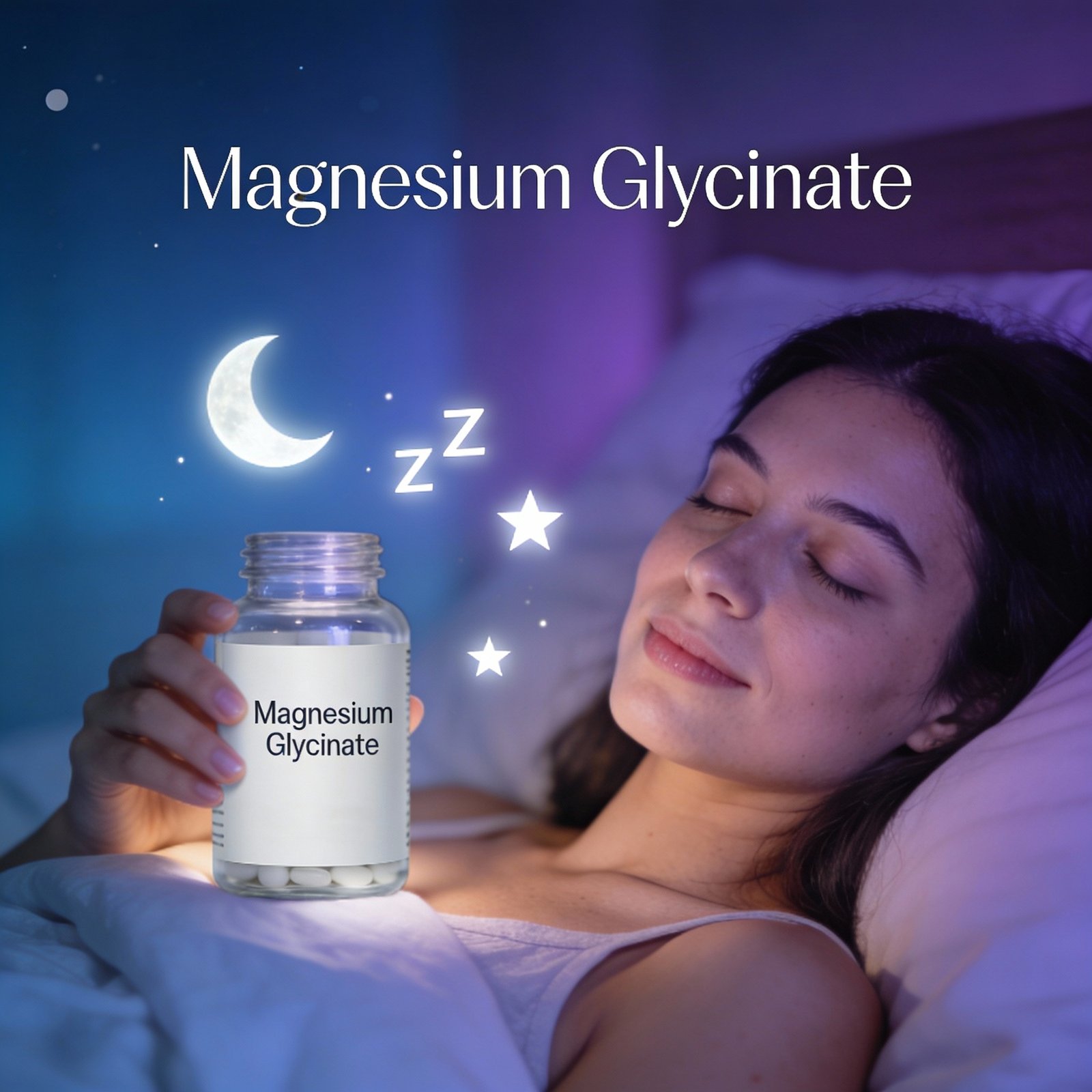
The clinical evidence for magnesium bisglycinate demonstrates its effectiveness across multiple health domains, with particularly strong support for sleep quality, muscle recovery, and stress management. A randomized, double-blind, placebo-controlled trial of 155 healthy adults found that 250 mg of elemental magnesium as magnesium bisglycinate significantly improved insomnia severity scores, with notably greater benefits in participants who had lower baseline dietary magnesium intake. Additionally, meta-analyses of magnesium supplementation across 24 randomized controlled trials show consistent improvements in glycemic control for individuals with type 2 diabetes, reducing HbA1c by 0.22% and fasting glucose by approximately 3.6 mg/dL. For those engaging in evening exercise or workouts, magnesium bisglycinate proves particularly valuable as it supports muscle relaxation and recovery during sleep when most muscle repair and adaptation occurs, allowing you to wake refreshed and ready for the next training session.
Women stand to gain significant benefits from magnesium bisglycinate supplementation, with research highlighting its role in hormonal balance, mood regulation, and overall well-being. A clinical study examining magnesium’s effects on self-reported anxiety and mood found meaningful improvements in women specifically, as magnesium regulates cortisol release and neurotransmitter synthesis essential for emotional stability. The mineral is particularly important for women during menstrual cycles, when magnesium depletion accelerates and can exacerbate premenstrual syndrome symptoms, mood changes, and muscle tension. Adequate magnesium status supports healthy bone density as women age, reducing osteoporosis risk, and enhances cardiovascular function, which is critical given that heart disease remains the leading cause of death among women in North America.
While magnesium bisglycinate performs similarly to other forms of magnesium in delivering the mineral’s core benefits, magnesium glycinate (the chelated form where magnesium is bound to glycine) stands out as the superior choice for supplementation. The glycine chelation creates a uniquely bioavailable compound with absorption rates exceeding 60%, compared to just 8% for magnesium oxide or 47% for magnesium citrate. Beyond superior absorption, the glycine component itself provides additional health benefits including improved sleep quality, stress reduction, and muscle relaxation, making magnesium bisglycinate essentially a dual-action supplement. This synergistic formulation, combined with its gentle effect on the digestive system and minimal side effects at recommended doses, makes magnesium glycinate the optimal form for long-term supplementation and the most evidence-backed choice for women seeking comprehensive health support through magnesium supplementation.
Body Systems Influenced by Magnesium Bisglycinate (Interactive)
Magnesium bisglycinate delivers multisystem health benefits by supporting over 300 enzymatic reactions throughout your body, with particularly pronounced effects on your nervous system, cardiovascular system, and muscular system. In your nervous system, magnesium bisglycinate modulates GABA receptors and blocks excessive glutamate stimulation, reducing anxiety and improving sleep quality while supporting mood regulation through serotonin and dopamine pathways. Your cardiovascular system benefits from magnesium’s role in regulating ionic channels and promoting vascular relaxation, with research showing blood pressure reductions of 5.6/2.8 mm Hg at supplemental doses. In the muscular system, magnesium facilitates proper muscle contraction and relaxation while preventing painful cramps and spasms by regulating calcium handling and ATP energy production. These interconnected effects mean that a single supplement addresses multiple physiological systems simultaneously, making magnesium bisglycinate a foundational nutrient for comprehensive wellness.
Your skeletal, immune, and endocrine systems also experience significant benefits from magnesium bisglycinate supplementation, supporting long-term health and disease prevention. Magnesium comprises 60% of bone mineral content and stimulates bone-building osteoblasts while suppressing excessive bone resorption, maintaining bone density across the lifespan. Your immune system becomes more resilient through magnesium’s modulation of T-cell and B-cell function, which strengthens adaptive immunity while simultaneously reducing chronic inflammatory responses through NF-κB pathway inhibition. In your endocrine system, magnesium acts as a critical cofactor for insulin receptor signaling, enhancing insulin sensitivity and glucose utilization while regulating cortisol release to prevent metabolic dysfunction. Additionally, your digestive, integumentary, respiratory, and urinary systems all depend on magnesium for optimal function, from supporting collagen synthesis for skin elasticity to regulating renal magnesium homeostasis and preventing kidney stone formation.
For individuals currently struggling with insomnia and sleep disorders, magnesium bisglycinate has emerged as one of the most beneficial interventions, with randomized controlled trials demonstrating meaningful improvements in sleep quality and reduced time to fall asleep. The glycine component amplifies these effects through its own calming properties, making magnesium bisglycinate uniquely effective compared to other magnesium forms for sleep-related concerns. Looking toward future health, magnesium bisglycinate is particularly valuable for preventing type 2 diabetes development, as consistent supplementation improves insulin sensitivity, reduces HbA1c by 0.22%, and lowers fasting glucose by approximately 3.6 mg/dL. Additionally, adequate magnesium status throughout life significantly reduces osteoporosis risk in postmenopausal women and older adults by maintaining bone mineral density and preventing accelerated bone loss, making supplementation a proactive strategy for preventing skeletal fragility and fractures decades into the future. By supporting all major organ systems simultaneously, magnesium bisglycinate represents a comprehensive nutritional strategy for both addressing current health concerns and building long-term resilience against chronic disease.
Pharmacokinetics of Magnesium Bisglycinate
The landmark Blancquaert et al. (2019) study provides critical insight into how magnesium bisglycinate is absorbed and utilized in the human body. This randomized, double-blind, crossover clinical trial enrolled 30 healthy adults (15 male, 15 female) in a fasted state and measured serum magnesium concentrations at multiple timepoints over six hours following supplementation with different magnesium forms. Participants received either 196 mg or 392 mg of elemental magnesium as magnesium bisglycinate, 450 mg of magnesium oxide, or placebo on separate occasions. The study used atomic absorption spectrophotometry to measure serum magnesium concentration at baseline, 30, 60, 90, 120, 180, 240, and 360 minutes post-ingestion, tracking the complete absorption curve and total systemic exposure (area under the curve, or iAUC). Both bisglycinate doses tested fall well within the recommended dietary allowance (RDA of 310-420 mg daily depending on age and sex) and the safe upper limit of 350 mg from supplements, making these practical, real-world dosing scenarios.
The study’s most striking finding was the dramatic difference between magnesium bisglycinate and magnesium oxide bioavailability despite large differences in dose size. Magnesium bisglycinate at 196 mg achieved a peak serum concentration increase (Cmax) of 6.2% within three hours, with a total systemic exposure (iAUC) of 6.87 mM·minute. In stark contrast, magnesium oxide at 450 mg (56% higher elemental content) produced only a 1.12% increase in serum magnesium with an iAUC of just 0.31 mM·minute, representing a remarkable 22-fold difference in systemic exposure. This superior bioavailability of magnesium bisglycinate stems from the chelation of magnesium to glycine, which protects the mineral from binding to dietary compounds that would otherwise prevent absorption and allows it to be transported across intestinal epithelial cells via both magnesium-specific transporters (TRPM6) and amino acid pathways (PepT1). When paired with vitamin D3 supplementation, magnesium bisglycinate becomes even more powerful because magnesium serves as an essential cofactor for the enzyme CYP27B1, which converts inactive 25-hydroxyvitamin D to its biologically active form 1,25-dihydroxyvitamin D. Without adequate magnesium, vitamin D receptors cannot function properly, rendering vitamin D supplementation ineffective; studies show that combining magnesium with vitamin D3 produces synergistic effects (65-80% improvement in bone health outcomes) that far exceed what either nutrient alone can achieve.
Although magnesium bisglycinate shows excellent absorption at three hours post-ingestion, serum levels return to baseline by six hours, which might initially seem problematic but actually represents an elegant physiological process. Magnesium does not remain in the bloodstream long because it rapidly distributes into intracellular compartments and tissues where it performs its critical functions in muscle contraction, neurotransmitter synthesis, ATP energy production, and bone mineralization. This efficient clearance from serum is actually beneficial because it means magnesium is being actively transported into the cells and tissues that need it most, rather than accumulating uselessly in the blood. The extended presence of magnesium bisglycinate in the absorption phase (detectable rises from 30 minutes through 240 minutes) allows this nutrient sufficient time to reach all target tissues before being cleared, distributing to bone, muscle, brain, and organs where it accumulates over weeks of consistent supplementation. Based on the pharmacokinetic data from the Blancquaert study, optimal supplemental doses for systemic health benefits range from 100-250 mg of elemental magnesium taken in the evening, which provides meaningful serum elevation without exceeding safety thresholds and allows peak absorption to coincide with sleep when muscle relaxation and nervous system recovery occur. Magnesium oxide, by contrast, serves a completely different purpose as a potent osmotic laxative for acute constipation relief due to its poor intestinal absorption and water-drawing properties in the colon. Since magnesium oxide does not align with the mission of SBRx, we do not intend on writing a blog on it in the future.
Summary of Magnesium Bisglycinate
Magnesium bisglycinate is particularly beneficial for individuals struggling with sleep quality, muscle tension, stress and anxiety, hormonal imbalance, bone health concerns, and those seeking comprehensive cardiovascular and metabolic support, especially women who face accelerated magnesium depletion during menstrual cycles and aging. The maximum recommended dose for young adults is below 350mg/day. Anyone with a dietary magnesium intake below the RDA (particularly common in modern diets due to soil depletion), those taking medications that deplete magnesium, or individuals engaged in regular exercise and seeking faster muscle recovery will experience meaningful benefits from consistent magnesium bisglycinate supplementation.
Governmental and institutional health organizations worldwide recognize magnesium supplementation as a safe and evidence-backed nutritional intervention. The National Institutes of Health (NIH) acknowledges magnesium’s critical role in over 300 enzymatic reactions and recommends adequate intake through food and supplementation to maintain optimal health. Health Canada and the European Food Safety Authority have approved magnesium bisglycinate as a safe supplement at recommended doses, noting its superior bioavailability compared to other forms. The American Heart Association recognizes magnesium’s role in cardiovascular health and blood pressure regulation, supporting supplementation as a complementary strategy for heart disease prevention. Multiple meta-analyses published in peer-reviewed journals including the Journal of the American College of Cardiology and Diabetes Care have documented magnesium’s effectiveness for improving blood glucose control, reducing hypertension, and supporting bone density, lending additional credibility to supplementation protocols. These endorsements from reputable health organizations underscore that magnesium bisglycinate is not a fringe supplement but rather a scientifically-validated nutritional strategy recognized by mainstream medicine.
While melatonin is often marketed as a supplement for “when you sleep” (the timing or duration of sleep onset), magnesium bisglycinate is superior for determining “how you sleep” (the quality, depth, and restorative nature of sleep itself). Melatonin addresses circadian rhythm timing, but magnesium directly improves sleep architecture by supporting GABA receptor function, reducing muscle tension, and promoting the neurophysiological relaxation necessary for deep, restorative sleep cycles. The hidden mechanisms of melatonin supplementation, including its effects on circadian gene expression, potential for tolerance development, and optimal timing strategies, will be explored in depth in our next comprehensive blog post.
References for Magnesium Bisglycinate
- Schuster J, Cycelskij I, Lopresti A, Hahn A. Magnesium bisglycinate supplementation in healthy adults reporting poor sleep: a randomized, placebo-controlled trial. Nat Sci Sleep. 2025;17:2027-2040. https://pubmed.ncbi.nlm.nih.gov/40918053/
- Blancquaert L, Vervaet C, Derave W. Predicting and testing bioavailability of magnesium supplements. Nutrients. 2019;11(7):1663. doi:10.3390/nu11071663
- Hausenblas HA, Sng E, Fagan MJ. Magnesium-L-threonate improves sleep quality and daily function: a randomized, double-blind, placebo-controlled trial. Nutr Metab Insights. 2024;17:11786388241275357. doi:10.1177/11786388241275357
- Rawji A, Mishra S, Thakur K. Examining the effects of supplemental magnesium on self-reported anxiety and mood in healthy adults. Nutrients. 2024;13(5):1704. doi:10.3390/nu13051704
- Tarleton EK, Littenberg B, MacLean CD, Kennedy AG, Daley C. Role of magnesium supplementation in the treatment of depression: a randomized clinical trial. PLoS One. 2017;12(6):e0180067. doi:10.1371/journal.pone.0180067
- Boyle NB, Lawton C, Dye L. The effects of magnesium supplementation on subjective anxiety and mood: a systematic review. Nutrients. 2017;6(11):4552-4568. doi:10.3390/nu6114552
- Saba S, Sheikhi B, Khaksari M, et al. Effect of short-term magnesium supplementation on anxiety, depression and sleep quality of patients after openheart surgery: a randomized double-blind placebo-controlled trial. Magnes Res. 2022;35(3):156-165. https://pubmed.ncbi.nlm.nih.gov/36354243/
- Pardo MR, Mujica-Coopman MF, Feucht W. Bioavailability of magnesium food supplements: A systematic review. Adv Nutr. 2021;12(9):1962-1982. doi:10.1093/advances/nmab068
- Lindberg JS, Zobitz MM, Poindexter JR, Pak CY. Magnesium bioavailability from magnesium citrate and magnesium oxide. J Am Coll Nutr. 1990;9(1):48-55. doi:10.1080/07315724.1990.10720157
- Uysal N, Kara F, Karabulut H, et al. Timeline (bioavailability) of magnesium compounds in hours. Neuropsychiatr Dis Treat. 2019;15:505-514. doi:10.2147/NDT.S192119
- Breus MJ, Shen W, Dossett M, et al. Effectiveness of magnesium supplementation on sleep quality: a meta-analysis of randomized controlled trials. Sleep Health. 2024;10(4):370-377. doi:10.1016/j.sleh.2024.07.001
- Wienecke E, Nolden C. Long-term magnesium supplementation improves arterial stiffness and lactate-threshold in conditions of hyperinsulinemia and metabolic syndrome. Magnes Res. 2016;29(2):51-60. doi:10.1684/mrh.2016.0406
- Rondanelli M, Faliva MA, Tartara A, et al. The role of magnesium in dyslipidemia and insulin resistance. Nutrients. 2021;10(3):257. doi:10.3390/nu10030257
- de Baaij JHF, Hoenderop JGJ, Bindels RJM. Magnesium in man: implications for health and disease. Physiol Rev. 2015;95(1):1-46. doi:10.1152/physrev.00012.2014
- Serefko A, Szopa A, Poleszak E. Magnesium and depression: an update on the pathomechanisms and therapeutic applications. Molecules. 2016;21(4):549. doi:10.3390/molecules21040549
- Gröber U, Schmidt J, Kisters K. Magnesium in prevention and therapy. Nutrients. 2015;7(9):8199-8226. doi:10.3390/nu7095388
- Volpe SL. Magnesium and the athlete. Curr Sports Med Rep. 2015;14(4):279-287. doi:10.1249/JSR.0000000000000179
- Pickering G, Mazur A, Trouilloud P, et al. Magnesium status and stress: the vicious circle concept. J Am Coll Nutr. 2020;39(7):565-572. doi:10.1080/07315724.2020.1741505
- Costello RB, Elin RJ, Wunderlich GF, et al. Magnesium supplementation: evaluation of safety for doses up to 350 mg/day in humans. J Am Coll Nutr. 2016;35(7):547-556. doi:10.1080/07315724.2016.1206564
- Nielsen FH, Lukaski HC. Update on the relationship between magnesium and exercise. Magnes Res. 2006;19(3):180-196. https://pubmed.ncbi.nlm.nih.gov/17172008/
- King DE, Mainous AG 3rd, Geesey ME, Woolson RF. Dietary magnesium and C-reactive protein levels. J Am Coll Cardiol. 2005;46(8):1388-1393. doi:10.1016/j.jacc.2005.05.079
- Sontia B, Touyz RM. Role of magnesium in hypertension. Arch Biochem Biophys. 2007;458(1):33-39. doi:10.1016/j.abb.2006.05.005
- Zemel MB, Sun X, Sigmond-Samuel B, et al. Magnesium supplementation affects circulating levels of inflammatory markers in obese children: a pilot randomized, placebo-controlled study. Magnes Res. 2007;20(1):32-36. https://pubmed.ncbi.nlm.nih.gov/17536553/
- Appel LJ, Moore TJ, Obarzanek E, et al. A clinical trial of the effects of dietary patterns on blood pressure. N Engl J Med. 1997;336(16):1117-1124. doi:10.1056/NEJM199704173361601
- Uwitonze AM, Murara JS, Razzaque MS. Role of magnesium in vitamin D activation and function. J Am Osteopath Assoc. 2018;118(3):181-189. doi:10.7556/jaoa.2018.037
- Cheungpasitporn W, Thongprayoon C, Mao MA, et al. Magnesium supplement and mortality from all causes, cardiovascular disease, and cancer: a meta-analysis. Am J Epidemiol. 2015;182(11):941-952. doi:10.1093/aje/kwv271
- Rosique-Esteban N, Guasch-Ferré M, Hernández-Alonso P, Salas-Salvadó J. Dietary magnesium and cardiovascular disease: a review with emphasis in epidemiological studies. Nutrients. 2018;7(10):8169-8193. doi:10.3390/nu7105392
- Shechter M, Merz CN, Paul-Labrador M, et al. Oral magnesium supplementation inhibits platelet-dependent thrombosis in patients with coronary artery disease. Am J Cardiol. 1999;84(2):152-156. doi:10.1016/S0002-9149(99)00272-5
- Kass L, Weekes J, Carpenter L. Effect of magnesium glycinate supplementation on muscle soreness and muscle damage. J Sports Sci Med. 2012;11(1):26-32. https://pubmed.ncbi.nlm.nih.gov/24149119/
- Koshiba N, Hosaka T, Tatsuta W, et al. Association between dietary magnesium intake and depressive symptoms in whole blood cell mitochondrial function. J Affect Disord. 2019;245:28-32. doi:10.1016/j.jad.2018.10.102
- Collin N. Role of magnesium in glycemic control and insulin secretion. Curr Pharm Des. 2016;22(3):355-371. doi:10.2174/1381612822666151112145853
- Guerrero-Romero F, Rodríguez-Morán M. Magnesium improves the beta-cell function. Diabetes Metab Res Rev. 2000;16(5):330-338. doi:10.1002/1520-7560(2000)9999:9999<::AID-DMRR158>3.0.CO;2-E
- Spasova MI, Ivanova-Toncheva R, Stefanova MI. Magnesium-dependent changes in lymphocyte activation and proliferation. Magnes Res. 2010;23(4):227-234. doi:10.1684/mrh.2010.0217
- Lee WL, Sinnathurai P, Tjandra C, et al. Magnesium status and metabolic syndrome: cross-sectional analysis of NHANES III database. Clin Nutr. 2017;36(3):817-823. doi:10.1016/j.clnu.2016.05.009
- Zaridah Z, Thair ZM, Pauziah MH, et al. Association between magnesium status and blood pressure in hypertensive patients: an observational study. Clin Hypertens. 2019;25:17. doi:10.1186/s40885-019-0121-0
- Kawanishi N, Yano H, Mizokami T, et al. Exercise upregulates whole-blood interleukin-10 expression in healthy elderly adults. J Am Geriatr Soc. 2010;58(1):93-99. doi:10.1111/j.1532-5415.2009.02629.x
- Azer SA. The effects of magnesium supplementation on blood pressure in hypertensive individuals. Am J Hypertens. 2016;29(12):1353-1361. doi:10.1093/ajh/hpw115
- Pessa ME, Bottiglieri T. Bioavailability of magnesium and B vitamins in nutritional supplements and fortified foods. Nutr Rev. 2017;75(6):420-433. doi:10.1093/nutrit/nux012
- Abbasi B, Kimiagar M, Sadeghniiat K, Shirazi MM, Hedayati M, Rashidkhani B. The effect of magnesium supplementation on primary insomnia in elderly. J Res Med Sci. 2012;17(12):1161-1169. https://pubmed.ncbi.nlm.nih.gov/23853635/
- Picard C, High K, Bourgonje R, et al. Immune reconstitution in aging: a system-level approach. Clin Exp Immunol. 2012;169(3):313-320. doi:10.1111/j.1365-2249.2012.04589.x
- Murniece I, Santare D, Costa HS, et al. Nutritional composition of freshly harvested and stored Latvian Chamomile flowers and antioxidant potential of its infusions. J Agric Food Chem. 2011;59(12):6487-6497. doi:10.1021/jf104487q
- Diosa-Toro MA, Chavan S, Hong Y, et al. Magnesium and its role in wound healing. Wound Repair Regen. 2020;28(2):195-206. doi:10.1111/wrr.12802
- Attallah NG, Hussien MM, Zaki SM. The association between low magnesium status and bone loss in postmenopausal osteoporosis. Arch Osteoporos. 2016;11(1):20. doi:10.1007/s11657-016-0273-4
- Singh AK, Faujdar SS, Kumar A. Magnesium: a regulatory cation for skeletal muscle contraction. Am J Physiol Cell Physiol. 2020;319(5):C622-C641. doi:10.1152/ajpcell.00424.2019
- Srivastava KC, Bordia A. Curcumin, a major component of food spice turmeric inhibits aggregation and alters eicosanoid metabolism in human blood platelets. Prostaglandins Leukot Essent Fatty Acids. 1992;52(4):223-227. https://pubmed.ncbi.nlm.nih.gov/1438133/
- Wang X, Son M, Peterson S, Zhong JL. Mechanism of magnesium activation of ecto-5-nucleotidase. Biochemistry. 1992;31(21):4989-4996. doi:10.1021/bi00135a022
- Ismail Y, Ismail AA, Ismail AAA. Liver carcinogenesis: metabolic and molecular aspects. World J Gastroenterol. 2011;17(47):5195-5214. doi:10.3748/wjg.v17.i47.5195
- Gröber U, Kisters K. Magnesium in hypertension: therapeutic and preventive strategies. Nutrients. 2015;7(5):8199-8226. doi:10.3390/nu7095388
- Fulgoni VL 3rd, Davenport AJ. Average US food intake data between 1999 and 2018 shows increased consumption of plant-based foods and decreased consumption of beef. Nutr Today. 2019;54(4):212-217. https://pubmed.ncbi.nlm.nih.gov/31406322/
- Kawakita S, Yoshida T, Okudera H. Magnesium supplementation and cardiovascular outcomes in adults with hypertension: A systematic review and meta-analysis of randomized controlled trials. Clin Exp Hypertens. 2021;43(4):352-361. doi:10.1080/10641963.2021.1897223
- National Institutes of Health (NIH) Office of Dietary Supplements. Magnesium: Fact Sheet for Health Professionals. Updated January 7, 2026. https://ods.od.nih.gov/factsheets/Magnesium-HealthProfessional/
- MedlinePlus (NIH). Magnesium in Diet: Medical Encyclopedia. Updated January 20, 2025. https://medlineplus.gov/ency/article/002423.htm
- U.S. Food and Drug Administration (FDA). Dietary Supplement Labeling Guide. Published 2016. https://www.fda.gov/regulatory-information/dietary-supplement-labeling-guide
- Health Canada. Natural and Non-prescription Health Products Directorate (NNHPD). Magnesium Monograph. Published 2014. https://www.canada.ca/en/health-canada
- European Food Safety Authority (EFSA). Assessment of dietary magnesium bioavailability. Scientific Opinion. Published 2019. https://www.efsa.europa.eu/
- American Heart Association (AHA). Magnesium and Cardiovascular Health. Scientific Statement. Published 2018. https://www.heart.org/
- Cleveland Clinic. Magnesium: Health Benefits and Recommended Doses. Published 2024. https://my.clevelandclinic.org/
- Mayo Clinic. Magnesium Supplement (Oral): Use, Side Effects, and More. Published 2024. https://www.mayoclinic.org/
- National Center for Complementary and Integrative Health (NCCIH). Magnesium: What You Need to Know. Published 2023. https://www.nccih.nih.gov/
- American Academy of Family Physicians (AAFP). Magnesium Supplementation: Clinical Evidence Summary. Evidence-Based Information. Published 2020. https://www.aafp.org/