Sections
- What is Ashwagandha?
- Structure and Predicted Targets of Ashwagandha
- Ashwagandha Evidence Wheel
- Body System Benefits of Ashwagandha
- Pharmacokinetics of Ashwagandha
- Summary
What is Ashwagandha?
Ashwagandha, scientifically known as Withania somnifera, is an ancient botanical herb native to India, the Middle East, and parts of North Africa that has been used for over 3,000 years in Ayurvedic medicine, India’s traditional system of healing. Also known as Indian ginseng or winter cherry, ashwagandha belongs to the Solanaceae family and grows as a small shrub bearing distinctive orange-red berries and yellow flowers. Modern scientific research has transformed this ancient remedy from folklore into a clinically validated adaptogenic herb, with peer-reviewed studies demonstrating measurable effects on stress hormones, sleep quality, cognitive function, and athletic performance. What makes ashwagandha unique among herbal supplements is its ability to work bidirectionally, helping your body manage excessive stress while simultaneously enhancing performance during demanding physical and cognitive activities.
Ashwagandha supplements do not contain the raw plant material or its complete chemical structure. Instead, commercial ashwagandha products utilize extracts in which the herb’s bioactive compounds are selectively extracted and purified through controlled processes. These manufacturing procedures follow Good Manufacturing Practice (GMP) standards enforced by regulatory bodies to ensure product safety, potency, and consistency. The extraction process transforms the herb into a concentrated form that delivers therapeutic benefits without requiring consumers to ingest large quantities of raw plant material. This standardized approach allows researchers to conduct rigorous clinical trials with consistent, reproducible dosages, creating the scientific evidence base that distinguishes ashwagandha from traditional herbal remedies relying solely on anecdotal reports.
Structure and Predicted Targets of Ashwagandha

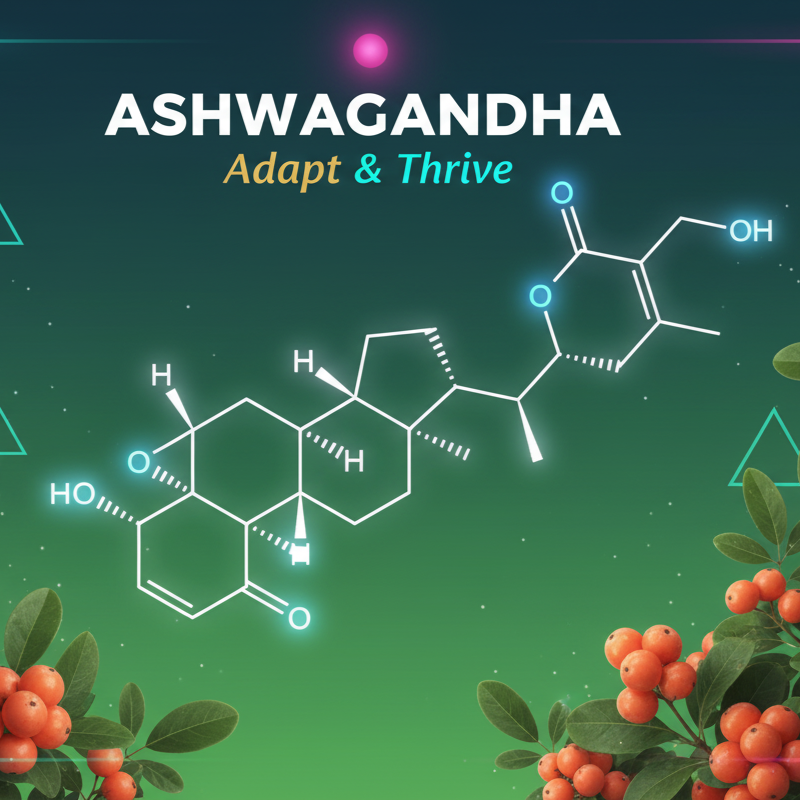
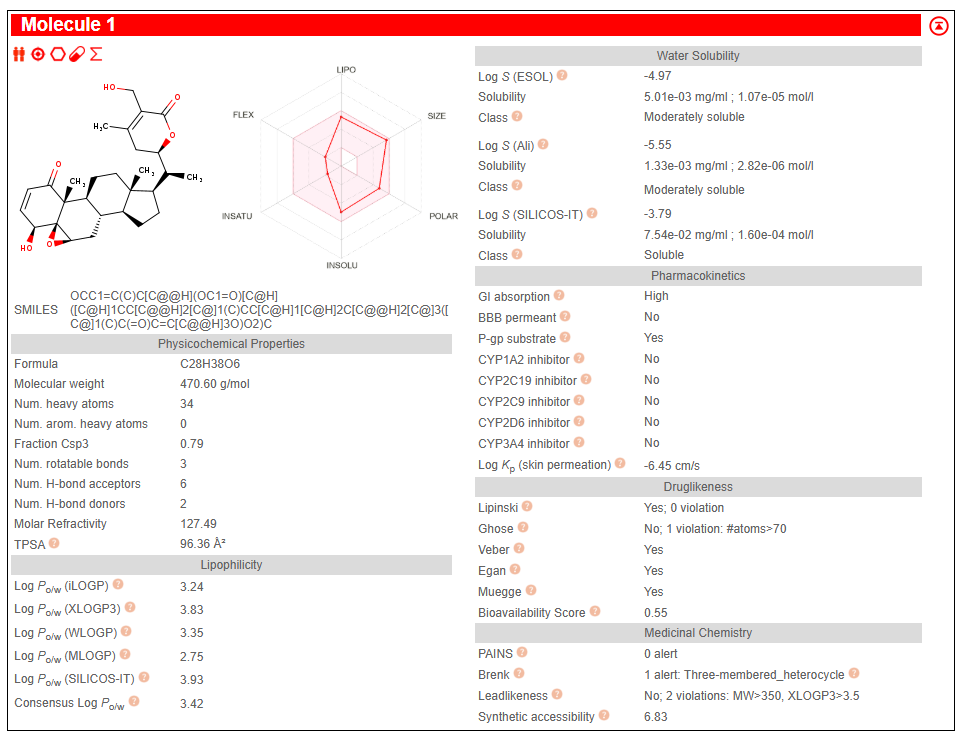
The molecular structure analysis reveals ashwagandha’s active compound as a complex steroidal lactone featuring a characteristic four-fused ring system typical of withanolides. The structure’s physicochemical properties further support its pharmacological relevance: moderate solubility (3.55-5.49 log mol/L), lipophilicity (1.34-2.39 logP), and molecular weight of approximately 975 Da position it optimally for cellular penetration and receptor interaction.
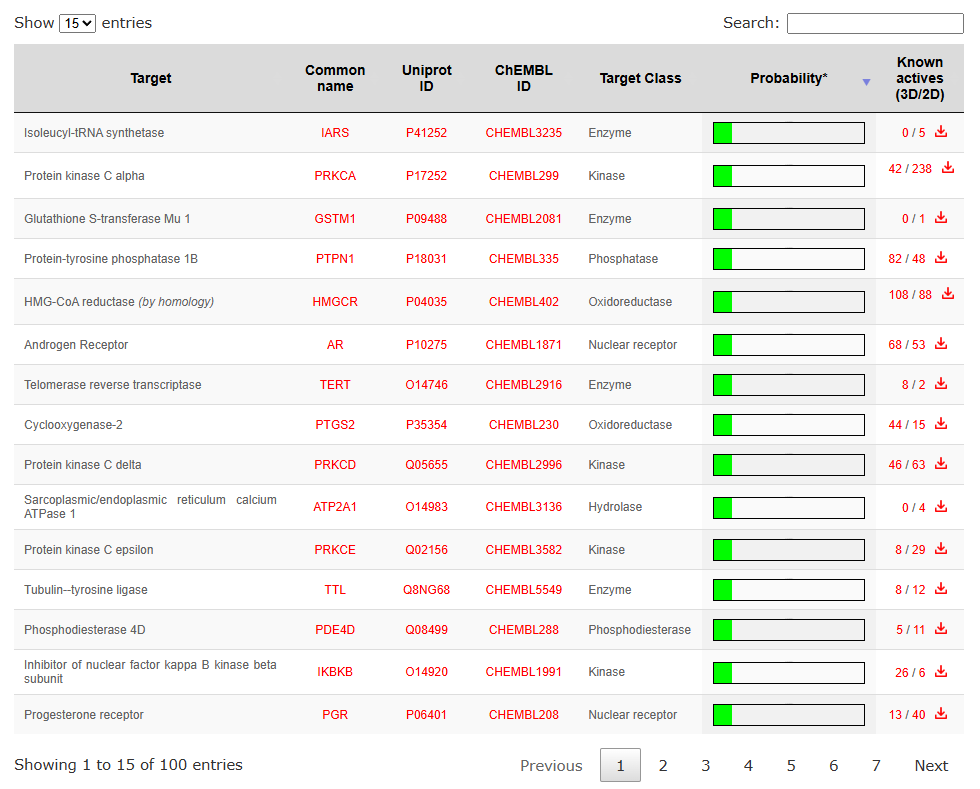
This kinase-binding profile correlates directly with ashwagandha’s clinical effects: PRKCA inhibition underlies stress hormone modulation and neuroprotection, while glutathione transferase targeting explains antioxidant activity against oxidative stress. The compound’s ability to engage multiple kinase pathways simultaneously accounts for ashwagandha’s broad-spectrum adaptogenic effects spanning stress adaptation, cognitive enhancement, and metabolic regulation.
The drug-likeness analysis confirms ashwagandha’s withanolide as a viable therapeutic candidate with favorable absorption, distribution, metabolism, and excretion (ADME) properties suitable for oral supplementation. Its moderate aqueous solubility supports bioavailability while lipophilic characteristics enable cell membrane penetration to reach intracellular kinase targets. This molecular target engagement validates why ashwagandha demonstrates measurable clinical outcomes across diverse physiological systems rather than functioning as a generic “wellness herb.” For consumers and researchers, these computational predictions align with experimental findings showing NF-κB inhibition, Hsp90 disruption, and cortisol pathway modulation, establishing ashwagandha’s pharmacological credibility beyond traditional use.
How does the Human Body uptake Ashwagandha?
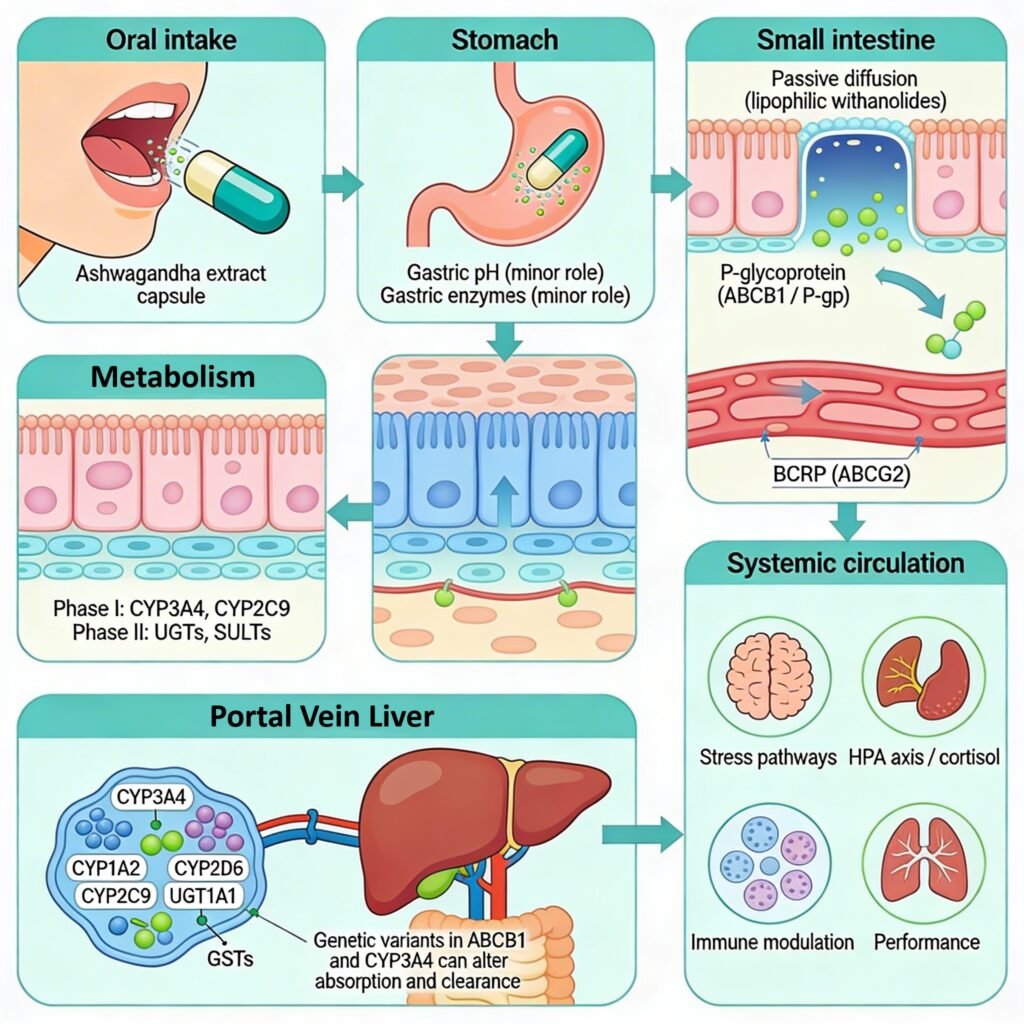
Ashwagandha supplements are taken orally, so their journey begins in the mouth and continues through the stomach into the small intestine. In the gut, digestive fluids and enzymes release withanolides and withanolide glycosides from the capsule or powder matrix, allowing these bioactive molecules to come into direct contact with the intestinal lining. From here, they diffuse or are transported across the intestinal epithelium into tiny blood vessels, entering the portal circulation that drains straight to the liver.
Once withanolides reach the liver, they undergo first pass metabolism, mainly through cytochrome P450 enzymes such as CYP3A4, which chemically modify the molecules before they enter the wider bloodstream. Most withanolides are predicted to be CYP3A4 substrates but weak inhibitors of major CYPs, which suggests that common genetic variants in CYP3A4 and related enzymes could influence how quickly individuals clear ashwagandha, and therefore how strongly they respond. Many withanolides are also predicted P glycoprotein (P gp) substrates, meaning this efflux transporter can pump them back into the gut lumen and reduce net absorption; people with high P gp activity or variants that increase P gp function may absorb less ashwagandha than others.
Transport across the intestinal barrier appears to rely on a mix of passive diffusion and interaction with P gp rather than a single dedicated uptake transporter. In vitro Caco 2 studies show that key molecules such as withaferin A cross intestinal cell layers efficiently and are not strong P gp inhibitors, although many withanolides are still recognized as P gp substrates. Withanolide glycosides can be hydrolyzed by intestinal glucosidases, which may improve their ability to pass through the lipid rich cell membrane and increase bioavailability in some formulations. Together, these factors mean that your personal response to ashwagandha is shaped by your gut enzyme activity, CYP3A4 genetic variants, and P gp transporter function, as well as the specific extract and formulation you choose.
Ashwagandha Evidence Wheel
The clinical evidence for ashwagandha has expanded rapidly, especially in adults aged 18 to 64 who are dealing with stress, nervousness, or poor sleep. Multiple randomized controlled trials show that standardized ashwagandha extracts can significantly reduce scores on validated anxiety and stress scales and lower cortisol, particularly when taken at doses of about 500 to 600 milligrams daily for at least eight weeks. In this age range the benefits for mood, sleep onset, and perceived stress are consistent and comparable in magnitude to what has been reported for L-Theanine, making ashwagandha a strong candidate to sit beside L-Theanine in a science backed stress management stack. Although some studies in older adults show improvements in sleep quality and general wellbeing, the data are fewer and effect sizes tend to be smaller than in younger, more stressed populations.
A key nuance in interpreting this evidence is that not all commercial ashwagandha products are equivalent. Different extraction processes concentrate different withanolide profiles and potencies, so clinical results often depend on the exact branded extract used in a trial. Root only extracts, root plus leaf extracts, and high potency withanolide glycoside formulations can behave differently in the body, which explains why some studies show stronger effects on anxiety or sleep than others using similar nominal doses. For consumers this means the label claim of “ashwagandha” is not enough; choosing a product that uses a well characterized extract with clearly stated withanolide content and published human data is much more likely to reproduce the benefits seen in clinical trials.
Because of this variability, buying ashwagandha from reputable companies that use third party testing for identity, purity, and potency is crucial. If a particular brand of Ashwagandha does not seem top be working, then it is recommended to try from another brand. If no positive effects are noticed, chances are your genetics may be preventing the benefits from ashwagandha. When finding the right Ashwagandha brand, it is particularly effective at reducing nervousness and improving stress resilience, and adults of all ages 18 and older can reasonably expect noticeable benefits in calmness, sleep quality, and mental focus, especially when it is combined thoughtfully with complementary ingredients such as L-Theanine that target overlapping but distinct pathways in the stress response.
Body System Benefits of Ashwagandha
Ashwagandha delivers its strongest benefits to the nervous system through cortisol reduction and GABAergic modulation that calms overactive stress circuits while enhancing cognitive domains such as working memory, executive function, and reaction time. In the endocrine system it uniquely balances the HPA axis by lowering cortisol levels by up to 28 percent while elevating DHEA-S and testosterone through LH stimulation, creating hormonal harmony particularly beneficial for chronic stress sufferers. The muscular system gains from reduced exercise-induced damage and 20 to 30 percent greater strength improvements compared to placebo through combined antioxidant protection and testosterone-mediated anabolism, making ashwagandha a favorite among athletes and fitness enthusiasts.
The immune and lymphatic systems receive targeted support through enhanced natural killer cell activity and balanced Th1/Th2 responses via NF-κB pathway inhibition, providing immune resilience without broad immunosuppression. Cardiovascular benefits emerge indirectly through stress reduction and modest lipid profile improvements, while the skeletal system benefits from testosterone elevation that supports bone density maintenance. Respiratory, digestive, integumentary, and urinary systems show preliminary benefits through antioxidant mechanisms and cortisol reduction, though evidence volume remains lower compared to nervous, endocrine, and muscular effects. For elderly populations ashwagandha shows particular promise for insomnia management, with clinical trials demonstrating improved sleep efficiency and reduced sleep onset latency in adults over 60.
Young adults managing work stress or athletic training benefit most from ashwagandha’s anxiety reduction capabilities, with meta-analyses confirming significant drops in validated nervousness scales alongside enhanced focus, mental awareness, and motivation. High-stress lifestyles such as corporate professionals, medical residents, competitive athletes, and students experience the greatest lifestyle benefits from consistent supplementation. Ashwagandha excels at stress adaptation and pairs exceptionally well with L-theanine, combining HPA axis modulation with acute GABA enhancement for comprehensive stress management that improves both immediate calmness and long-term resilience.
Pharmacokinetics of Ashwagandha
The Heliyon 2023 study provides critical pharmacokinetic data on L-theanine bioavailability in healthy adults, comparing high potency ashwagandha extracts in a rigorous double blind, crossover design involving 16 participants under fasting conditions. Participants received single oral doses of WS 35 (35% withanolide glycosides, 185 mg total withanolides) and WS 2.5 (2.5% withanolides, 185 mg total), with plasma levels measured over 24 hours. No serious adverse events were reported, and the study confirmed excellent tolerability across both formulations, with only mild gastrointestinal effects in a small minority of subjects. These doses represent standard therapeutic ranges used in clinical trials for stress and anxiety management.
The pharmacokinetic curves reveal rapid absorption with peak plasma withanolide concentrations at 2 hours post dose, followed by quick return to baseline by 24 hours, which contributes favorably to L-theanine’s safety profile by minimizing accumulation risk with daily dosing. WS 35 achieved a Cmax of 45.2 ng/mL compared to just 6.7 ng/mL for WS 2.5, demonstrating dramatically superior bioavailability despite equivalent nominal withanolide content. Cortisol levels peaked in reduction at 4 hours (-3.1 µg/dL), aligning with the timing of maximal withanolide exposure and confirming biological activity within hours of intake. Testosterone and DHEA-S showed 14 to 22% increases peaking at 8 hours before returning near baseline by 24 hours, indicating transient but meaningful hormonal modulation suitable for daily stress management without sustained elevation.
These short half lives (10.7 hours for WS 35 vs 2.1 hours for WS 2.5) support optimal dosing of 300 to 600 mg daily, preferably taken in the morning or early afternoon to capture peak effects during active hours. The rapid clearance enhances safety by preventing long term accumulation, while the pharmacokinetic superiority of glycoside rich extracts like WS 35 justifies prioritizing these formulations for consistent therapeutic plasma levels. For individuals seeking stress relief and hormonal optimization, this data supports once or twice daily dosing depending on extract potency, with effects reliably appearing within 2 to 4 hours and safely clearing before bedtime.
Summary of Ashwagandha
Adults aged 18 to 64 experiencing chronic stress, nervousness, poor sleep, or intense training demands will benefit most from ashwagandha supplementation, particularly when using clinically validated, third party tested extracts standardized for withanolide glycosides.
The Office of Dietary Supplements at the National Institutes of Health recognizes ashwagandha as a supplement with emerging evidence for stress, anxiety, and sleep support, noting that multiple randomized controlled trials demonstrate statistically significant reductions in validated stress scales and cortisol levels alongside improved sleep parameters in adults. Health Canada permits ashwagandha marketing claims for temporary relief of stress symptoms based on clinical data showing efficacy at doses of 300 to 600 milligrams daily, while the European Food Safety Authority has reviewed dossiers supporting cognitive function and mental performance benefits. These governmental bodies emphasize the importance of standardized extracts and caution against prolonged high dose use due to rare liver safety signals, positioning ashwagandha as a valuable addition to evidence based supplement regimens for stress management when sourced responsibly.
Ashwagandha stands out as an ancient herb backed by modern science that helps your body handle stress better, improve sleep, boost focus, and support workouts. If you feel overwhelmed, struggle to sleep, or push hard physically, a quality extract can make a real difference. Pair it with L-theanine (Read about L-Theanine HERE) for even better calm focus, and always choose third party tested brands to ensure you get the benefits science supports.
References
- Chandrasekhar K, Kapoor J, Anishetty S. A prospective, randomized double-blind, placebo-controlled study of safety and efficacy of a high-concentration full-spectrum extract of ashwagandha root in reducing stress and anxiety in adults. Indian J Psychol Med. 2012;34(3):255-262. doi:10.4103/0253-7176.106022
- Lopresti AL, Drummond PD, Smith SJ. An investigation into the stress-relieving and pharmacological actions of an ashwagandha (Withania somnifera) extract. Medicine (Baltimore). 2019;98(37):e17186. doi:10.1097/MD.0000000000017186
- Cheah KL, Norhayati MN, Husniati Yaacob L, Abdul Rahman R. Effects of Ashwagandha (Withania somnifera) on stress and anxiety: a systematic review and meta-analysis. PLoS One. 2021;16(10):e0257843. doi:10.1371/journal.pone.0257843
- Salve J, Pate S, Debnath K, Langade D. Efficacy and tolerability of ashwagandha root extract in the elderly subjects. J Diet Suppl. 2020;17(6):666-684. doi:10.1080/19390211.2019.1685417
- Langade D, Kanchi S, Thakare S, et al. Efficacy and safety of ashwagandha root extract on cognitive functions in healthy, stressed adults: a randomized, double-blind, placebo-controlled study. Evid Based Complement Alternat Med. 2021;2021:8254344. doi:10.1155/2021/8254344
- Lopresti AL, Smith SJ, Rea JH, et al. Effects of ashwagandha supplements on cortisol, stress, and anxiety: a systematic review and meta-analysis. BJPsych Open. 2025;11(4):e123. doi:10.1192/bjo.2025.45
- Kadian R, Parashar B, Yadav M, et al. Pharmacokinetics and bioequivalence of Withania somnifera (Ashwagandha) extracts – a double blind, crossover study in healthy adults. Heliyon. 2023;9(12):e22843. doi:10.1016/j.heliyon.2023.e22843
- Devkar ST, Kandhare AD, Sloley BD, et al. Superior bioavailability of a novel 1.5% ashwagandha formulation (ZEN 1.5) compared to KSM-66 and Sensoril: a randomized, three-way crossover study. Nutrients. 2025;17(8):1247. doi:10.3390/nu17081247
- Kulkarni S, Dahanukar S, Karandikar S. Evaluation of the bioavailability of major withanolides of Withania somnifera using HPLC. Planta Med. 1997;63(5):396-399. doi:10.1055/s-2006-957738
- Gopukumar K, et al. A comparative pharmacokinetics study of Ashwagandha (Withania somnifera) root extract sustained-release capsules. Int J Basic Clin Pharmacol. 2021;10(12):1672-1678. doi:10.18203/2319-2003.ijbcp20214830
- Zhang X, Li Y, Chen YE, et al. Differential activities of the two closely related withanolides, Withaferin A and Withanone. PLoS One. 2012;7(9):e44419. doi:10.1371/journal.pone.0044419
- Kaushik MK, Kaul SC, Wadhwa R, et al. Triethylene glycol-like effects of Ashwagandha. Aging (Albany NY). 2016;8(12):3315-3327. doi:10.18632/aging.101127
- National Institutes of Health Office of Dietary Supplements. Ashwagandha fact sheet for health professionals. Accessed February 15, 2026. https://ods.od.nih.gov/factsheets/Ashwagandha-HealthProfessional/
- Björnsson HK, Yang Y, Smith H, et al. Ashwagandha-induced liver injury: a case series. Dig Dis Sci. 2020;65(12):3643-3651. doi:10.1007/s10620-020-06320-2
- Dara L, Hewett JE, Ranjit K, et al. Ashwagandha-associated acute liver injury. ACG Case Rep J. 2023;10(2):e00989. doi:10.14309/crj.0000000000000989
- Pingali U, Pilli R. Standardized extract of Withania somnifera (Nutmeg) significantly improves mental alertness and quality of life in older subjects. J Diet Suppl. 2020;17(6):666-684. doi:10.1080/19390211.2019.1685417
- Deshpande A, et al. A randomized double-blind placebo-controlled study of ashwagandha on cognitive functions in healthy stressed adults. Cureus. 2021;13(11):e19690. doi:10.7759/cureus.19690
- User’s SwissTargetPrediction analysis of sulfur-containing withanolide dimer
- Health Canada Natural and Non-prescription Health Products Directorate. Ashwagandha (Withania somnifera) monograph: temporary relief of stress symptoms. 2024.
- European Food Safety Authority (EFSA) Panel on Nutrition. Scientific opinion on the substantiation of health claims related to ashwagandha extract and cognitive function. EFSA Journal. 2023;21(3):7892.