Sections
What is Berberine?
Berberine is a botanical herb compound found in plants such as barberry, goldenseal, and Oregon grape, and it has been used for centuries in traditional wellness systems. Today, it is widely discussed for its possible role in supporting blood sugar balance, metabolism, and heart health, which is why searches for “berberine benefits” have grown so quickly.
One of the most interesting parts of berberine is its connection to Persian cuisine, especially through barberry, known as zereshk in Iran. These bright red berries add a tangy flavor to rice dishes, stews, and sauces, giving Persian food a distinct taste while also linking it to one of nature’s most talked-about plant compounds.
Many people also associate Iranian eating habits with long life because the traditional diet often includes fresh herbs, legumes, vegetables, yogurt, nuts, and nutrient-rich ingredients like barberries. While longevity depends on many factors, this food culture has helped make Persian cuisine especially appealing to people looking for flavorful ways to support everyday wellness.
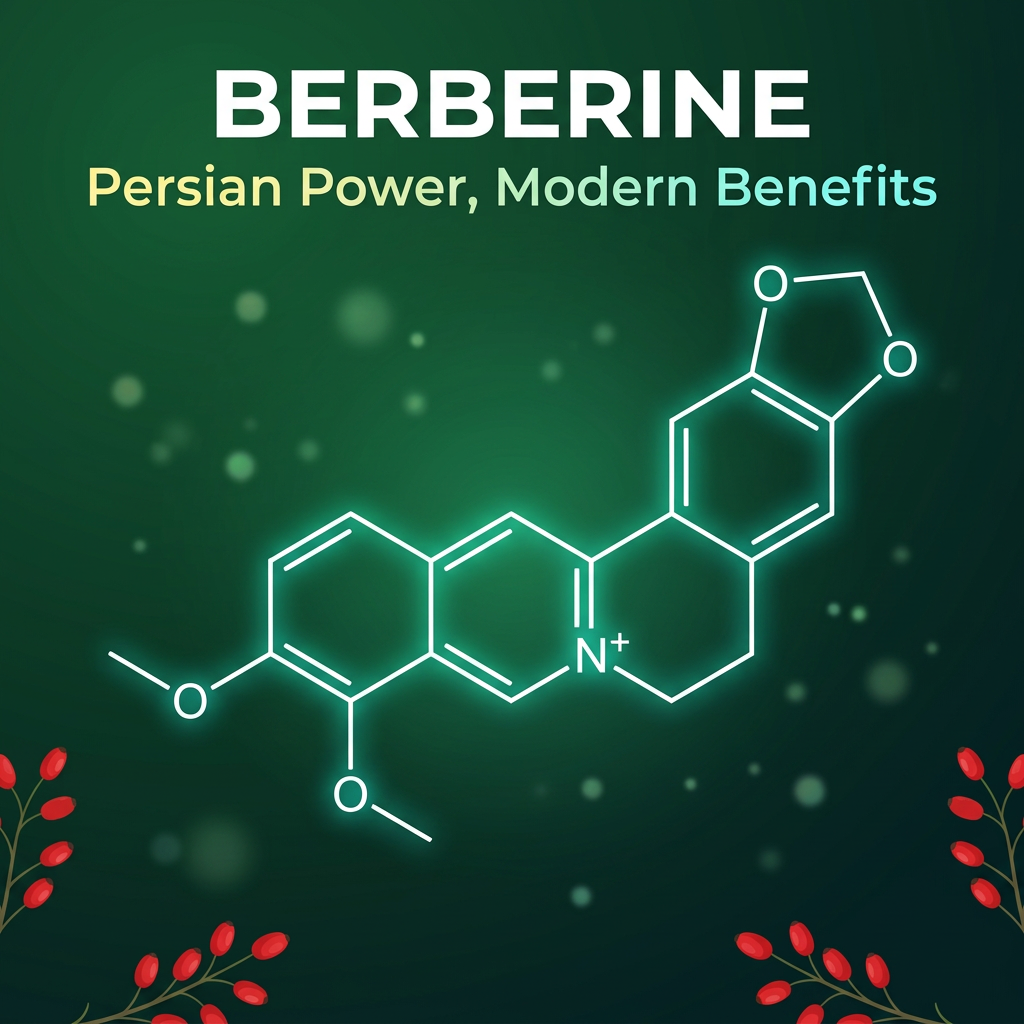
Structure of Berberine

Berberine has a distinctive molecular structure that appears to interact with several biological targets rather than just one. That broad profile is one reason it continues to draw attention in searches related to natural compounds, plant-based supplements, and metabolic support.
Berberine is especially interesting because its chemistry points to activity across multiple pathways in the body. That makes it a compelling botanical compound for anyone looking to understand how structure, target binding, and potential health effects connect.
Predicted Targets of Berberine
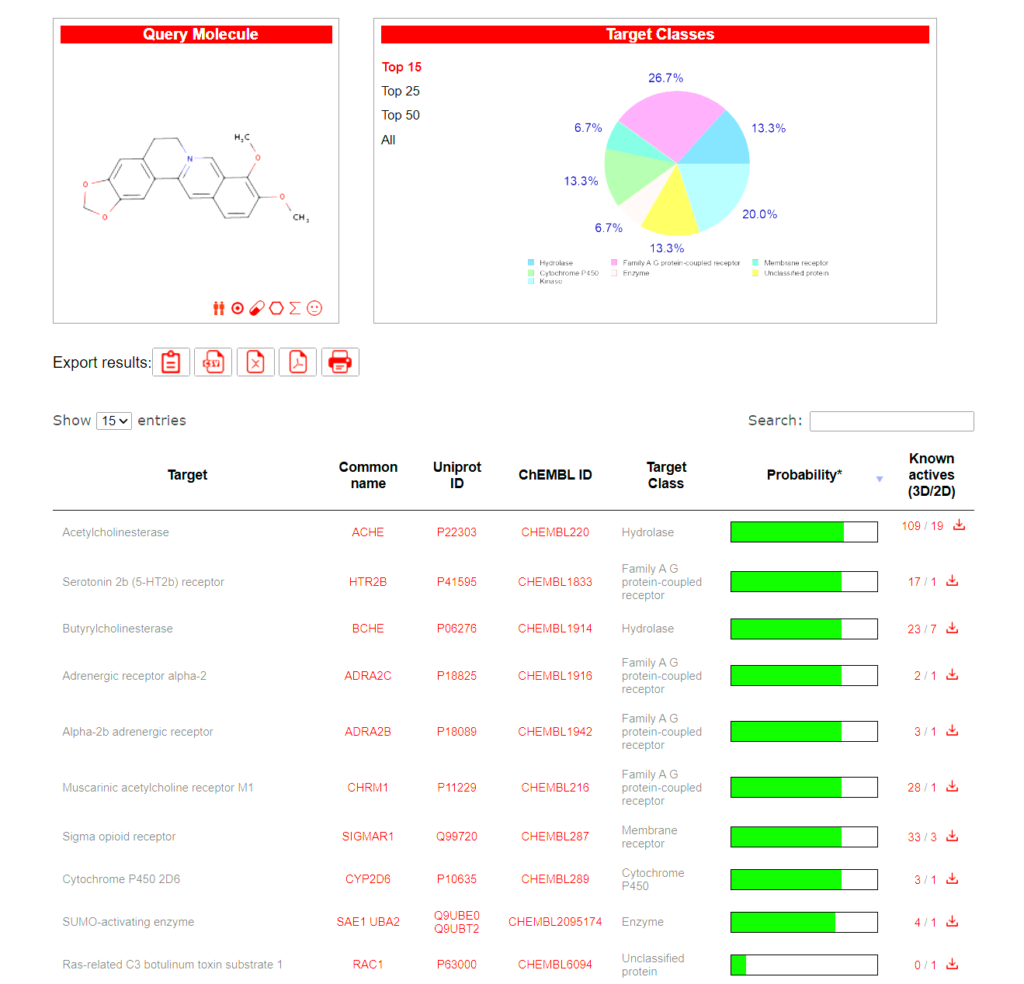
Berberine’s predicted targets point to several key biological systems, which helps explain why it is studied as a multi-pathway botanical compound rather than a single-purpose ingredient. The main targets in this analysis include acetylcholinesterase and butyrylcholinesterase, which break down acetylcholine and affect nerve signaling, along with the serotonin 5-HT2B receptor, alpha-2 adrenergic receptors, and the muscarinic acetylcholine receptor M1, all of which are involved in brain, cardiovascular, and autonomic signaling.
It also appears to connect with sigma opioid receptor signaling, CYP2D6, SAE1 UBA2, and RAC1, which are linked to stress response, drug metabolism, protein regulation, and cell behavior. That broad target profile is one reason berberine continues to rank well in searches for “berberine structure,” “berberine mechanism,” and “predicted targets of berberine,” because it suggests a compound that may influence metabolism, signaling, and cellular regulation all at once.
How does the human body uptake Berberine?
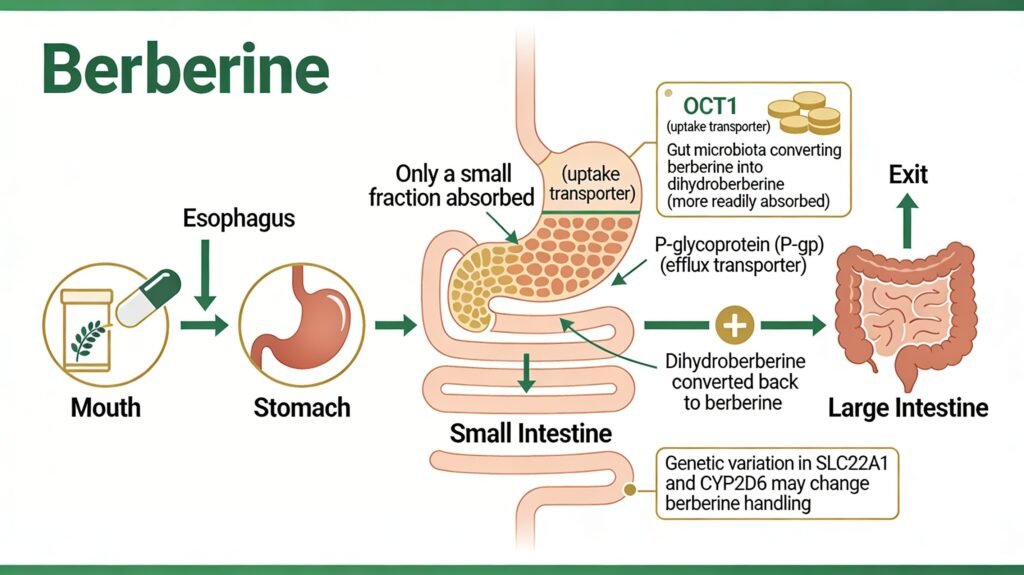
Berberine starts its journey in the mouth, but it is absorbed mainly in the small intestine, where oral bioavailability is very low because the compound is poorly soluble and is pushed back into the gut by efflux systems. Human data suggest that only about 0.5% of an oral dose is absorbed in the small intestine and about 0.36% reaches the systemic circulation, while the rest is lost to incomplete absorption and first-pass metabolism in the intestine and liver.
The main transporter linked to uptake is OCT1, encoded by SLC22A1, while P-glycoprotein (P-gp) can limit uptake by pumping berberine back into the intestinal lumen. After passing through the small intestine, some berberine is metabolized by gut microbes into dihydroberberine, which is absorbed more easily and then converted back to berberine inside intestinal tissue. Genetic variation can change this process too, especially in SLC22A1 and CYP2D6, and one human study found that CYP2D6 differences affected berberine metabolism, with stronger effects seen in females, while OCT1 variation did not always produce the same effect across studies.
By the time berberine moves through the rest of the digestive tract, much of the original dose has already been transformed, recycled, or excreted, which is why formulation, gut microbiota, transporter activity, and gene variants all matter for berberine absorption and response.
Berberine Evidence Wheel
Berberine has built its reputation on a substantial clinical record, especially in metabolic health. Randomized controlled trials and subsequent meta-analyses have repeatedly examined its effects on type 2 diabetes, insulin resistance, dyslipidemia, metabolic syndrome, and related cardiometabolic markers, with the most consistent improvements seen in HbA1c, fasting glucose, triglycerides, LDL-C, and HOMA-IR.
What makes berberine especially interesting in a broader supplement conversation is how naturally it fits alongside other metabolism-focused ingredients like magnesium, omega-3s, and vitamin D. Those nutrients are often discussed in the context of inflammation and cardiometabolic support, while berberine stands out because it has a larger body of RCT-based evidence directly tied to blood sugar and lipid outcomes. The evidence is strongest when the goal is metabolic support rather than general wellness, and that distinction matters for anyone comparing it with other popular supplements.
The biggest benefits tend to appear in adults with obesity, prediabetes, type 2 diabetes, PCOS, or metabolic syndrome, while evidence is thinner in healthy populations and in subgroup analyses by age or ethnicity because many trials are not designed around those distinctions. That makes berberine a compelling botanical with real clinical promise, but one whose effects are best described as strong for metabolic markers and more limited outside that context.
Body System Benefits Berberine
Berberine shows the clearest body system benefits in the digestive, cardiovascular, and endocrine systems, which is why it is so often discussed in metabolic health research. In the digestive tract, it interacts with the gut microbiome and intestinal signaling, which helps explain its effects on glucose handling and inflammation. In the cardiovascular system, clinical trials and meta-analyses show improvements in LDL cholesterol, triglycerides, and other cardiometabolic markers, while the endocrine system benefits are strongest for insulin resistance and blood sugar control.
For older adults, berberine may be especially useful in type 2 diabetes or metabolic syndrome, since those are the areas with the most consistent human evidence and the highest clinical relevance in aging populations. For young adults, one of the most compelling uses is PCOS, where berberine may support insulin sensitivity, waist circumference, hormone balance, and lipid profiles. That makes it a good complement to other supplements we have discussed in this space, especially vitamin D, magnesium, and omega-3s, because all four are often framed around metabolic balance, inflammation, and long-term cardiometabolic health.
Berberine also has smaller but interesting effects on the nervous, immune, muscular, skeletal, skin, urinary, and respiratory systems, although the evidence is less direct than for metabolism. Its nervous system potential is tied to cholinergic and inflammatory pathways, while its immune effects are linked more to anti-inflammatory and antimicrobial activity than to disease-specific human trials. The broader pattern is that berberine acts like a multi-system botanical, but its strongest and most reproducible benefits remain in gut health, blood sugar control, and cardiovascular risk reduction.
Pharmacokinetics of Berberine
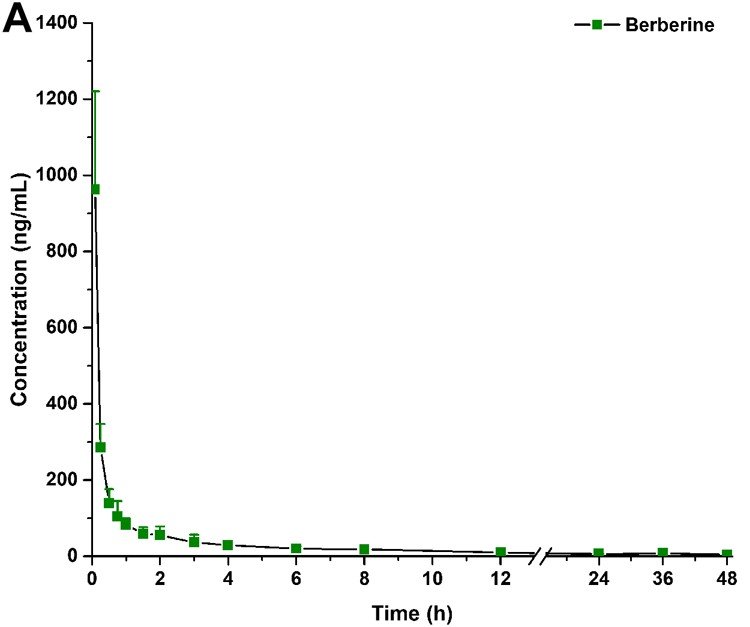
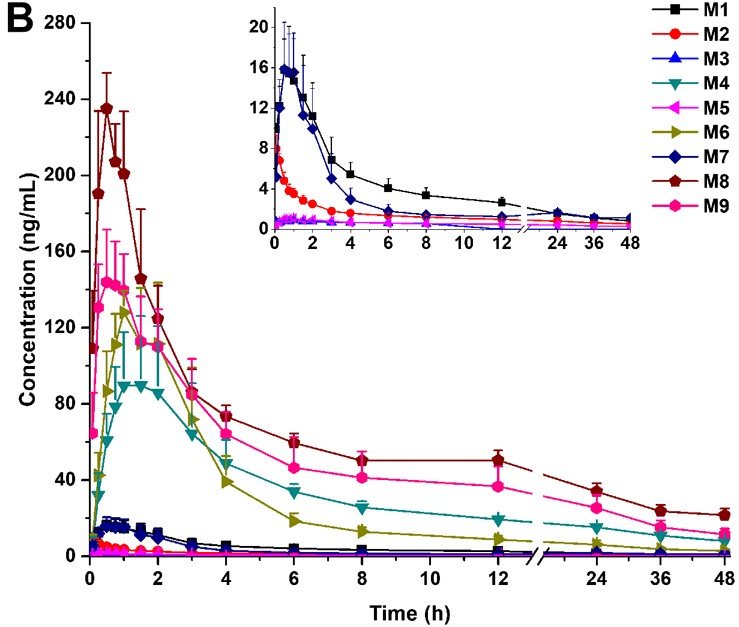
The two figures (from Feng et al., 2021) show a clear pharmacokinetic pattern for berberine in rats, with the parent compound rising rapidly after dosing and then declining steeply over time. This profile is consistent with low oral exposure and fast clearance, which helps explain why berberine concentrations in blood remain relatively limited compared with its downstream metabolites.
The second figure shows that M1 through M9 become prominent after administration, with several metabolites reaching much higher concentrations than berberine itself. This indicates that berberine’s in vivo behavior is driven by extensive metabolism, and that its biological activity should be understood as the combined effect of the parent compound and its circulating metabolites.
From a scientific perspective, the main message is that berberine does not act as a single static molecule in the body. Instead, it undergoes rapid biotransformation, and those metabolite peaks appear to be central to its pharmacology. As reported by Feng et al., (2021), the concentration-time curves make it clear that the metabolite network is a major part of the berberine exposure story.
While recent RCT study from Lei et al., (2026) conclude that Berberine had no effect on visceral adipose tissue (VAT) a.k.a fat loss, it proves to be beneficial for other ailment such as polycystic ovary syndrome (PCOS) as proposed by Zhang et al., (2021). Though, it lacks a large clinical studies.
Summary of Berberine
With regards to weight-loss, Berberine is not effective as most of social media tout it as “Nature’s Ozempic”. However, Berberine may be a useful supplement for people looking to support blood sugar balance, healthy cholesterol levels, and overall metabolic health, especially adults with insulin resistance, type 2 diabetes, metabolic syndrome, or PCOS. It may also appeal to people interested in gut health and those who want a plant-based, research-backed option that fits into a broader wellness routine. Several public health and medical organizations note that berberine has promising effects in clinical studies, but they also stress that it is not a substitute for prescribed treatment and can interact with medications, such as metformin. That balanced view makes it a potentially essential addition to your supplement regiment when used thoughtfully and with the right context.
References
- Feng R, He M, Li Q, et al. Pharmacokinetics and Excretion of Berberine and Its Nine Metabolites in Rats. Front Pharmacol. 2021;11:594852. doi:https://doi.org/10.3389/fphar.2020.594852
- Zuo F, et al. Pharmacokinetics of Berberine and Its Main Metabolites in Healthy Volunteers and Hypercholesterolemic Patients. J Nat Prod. 2014;77(2):263-269. doi:https://doi.org/10.1021/np400607k
- Li Y, et al. Bioactivities of Berberine Metabolites after Transformation through the Gut Microbiota. Evid Based Complement Alternat Med. 2011;2011:1-9. doi:https://doi.org/10.1155/2011/630511
- Alolga RN, et al. Significant Pharmacokinetic Differences of Berberine Are Attributable to Variations in Gut Microbiota in Healthy African and Chinese Volunteers. Sci Rep. 2016;6:27671. doi:https://doi.org/10.1038/srep27671
- Feng R, He M, Li Q, et al. Gut Microbiota-Regulated Pharmacokinetics of Berberine in Beagle Dogs. Front Pharmacol. 2018;9:214. doi:https://doi.org/10.3389/fphar.2018.00214
- Xie W, et al. Tissue Distribution of Berberine and Its Metabolites after Oral Administration in Rats. PLoS One. 2013;8(10):e77969. doi:https://doi.org/10.1371/journal.pone.0077969
- Wang Y, et al. Berberine: A Review of Its Pharmacokinetics Properties and Therapeutic Potentials. Pharmacol Res. 2021;170:105651. doi:https://doi.org/10.1016/j.phrs.2021.105651
- Liu Y, et al. Biodistribution and Pharmacokinetic Profile of Berberine and Its Metabolites in HepG2 Cells. Drug Metab Rev / related pharmacokinetic study. 2022. doi:https://doi.org/10.1016/j.jpha.2022.02.001
- Hua W, et al. Determination of Berberine in Human Plasma by LC-MS/MS and Pharmacokinetic Study in Healthy Volunteers. J Chromatogr B. 2007. doi: https://doi.org/10.1016/j.jchromb.2007.08.011
- Kheir MM, et al. Berberine in Cardiovascular and Metabolic Diseases: From Mechanisms to Therapeutics. Curr Med Chem. 2010s review. doi:https://doi.org/10.2174/092986710793176590